How Often to Water Pumpkins
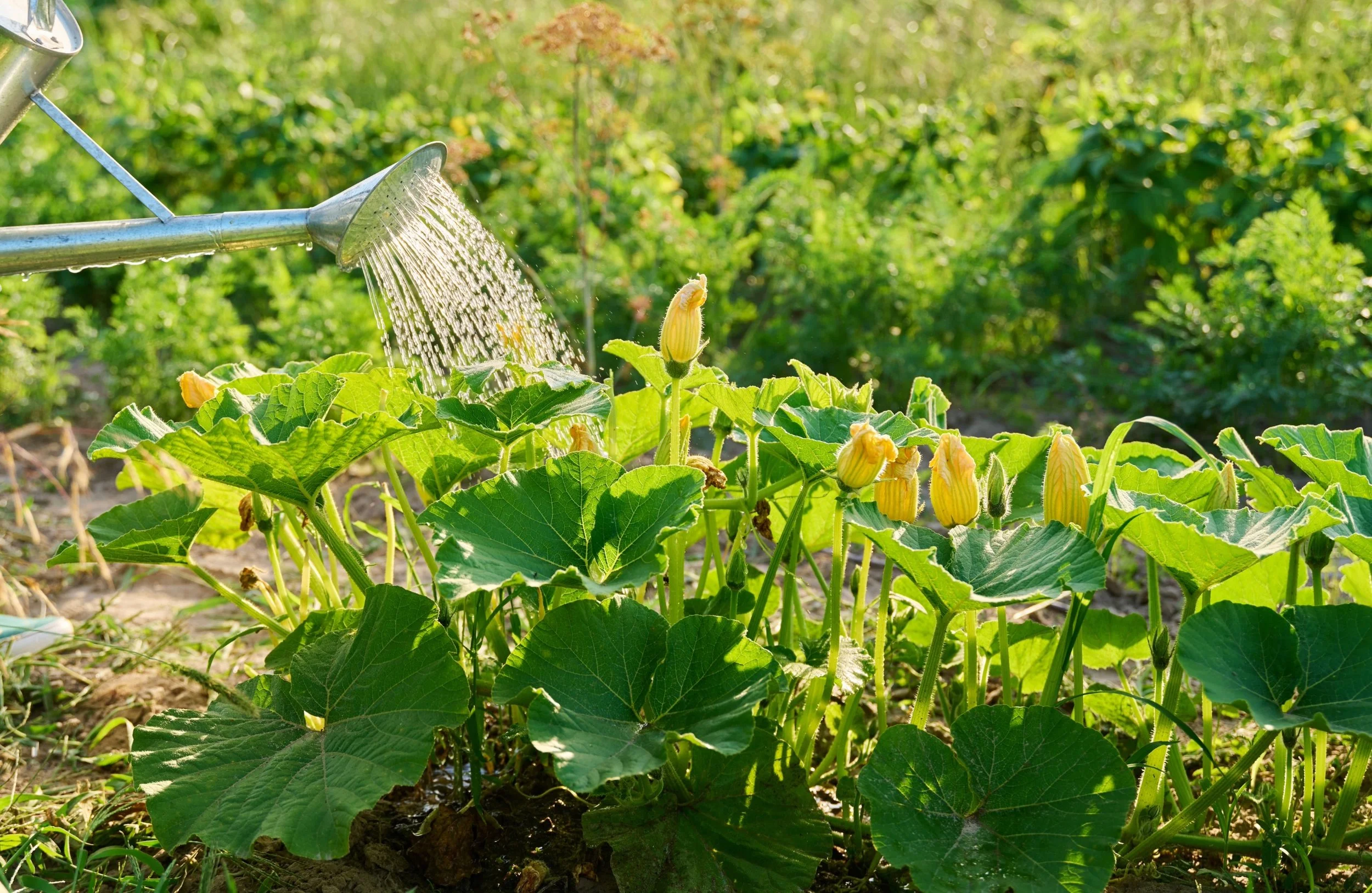
Pumpkins are some of the thirstiest plants in the vegetable garden. Those huge leaves lose a lot of moisture on a sunny day, and the fruits themselves are mostly water. Get the watering right and you'll be rewarded with big, well-filled pumpkins. Get it wrong and you'll see small fruits, early mildew and plants that stop growing.
Quick answer
Water pumpkins deeply rather than often. In the ground, a thorough soak once or twice a week is usually enough in average weather, rising to every two or three days in a hot, dry spell. Plants in containers may need water every day in summer. They need the most once the fruits start to swell. Water less in late summer as the pumpkins ripen, and always water the soil, not the leaves.
How pumpkins' water needs change through the season
After planting out (late May to June): water each plant in well on the day you plant it. After that, a light watering every few days is plenty until the roots are established. Young plants struggle in cold, soggy soil, so don't overdo it.
Vines spreading (June to July): at this stage a pumpkin plant can double in size in a fortnight, and every new leaf increases how much water it needs each day. Check the soil every few days and give a long soak when it's dry below the surface.
Fruits swelling (July to August): this is when pumpkins need the most water. Steady moisture now decides how big the fruits get. Dry spells at this stage mean smaller pumpkins and a higher risk of powdery mildew.
Ripening (September to October): once the pumpkins have reached full size and the skins start to harden, water less. The plant needs less now, and wet soil around ripening fruits encourages rot.
How to tell if pumpkins need water
Push a finger or a trowel into the soil next to the plant. If it's dry 5 cm or so down, it's time to water.
Don't rely on drooping leaves alone. On a hot afternoon, pumpkin leaves often droop even when the soil is damp, simply because they lose moisture faster than the roots can replace it. Look again in the early evening or the next morning. If they've recovered, the plant is fine. If they're still limp in the morning, it needs a drink.
How to water pumpkins in the ground
Give a deep soak, not a sprinkle. A little water every day only wets the surface and encourages shallow roots. Water slowly and thoroughly, so it soaks well down.
Use a sunken pot. When you plant, bury an empty plant pot about 15 cm across next to each pumpkin, with its rim just above the soil. Fill it when you water. That way, every drop goes down to the roots rather than running off the surface.
Keep the leaves dry. Water the soil at the base, not over the leaves, as wet leaves encourage mildew.
Water early or late. Watering in the morning or evening means less is lost to evaporation. Water from a water butt is ideal.
Mulch after watering. Cover damp soil with 5 cm or so of compost or rotted manure. It acts like a lid, so the ground stays moist for days longer. Keep it clear of the stem itself.
Watering pumpkins in containers
Even a big pot holds only a fraction of the water a pumpkin's roots could reach in open ground. In July and August, it can dry out in a single sunny day. Check it every morning in warm weather, and water until water runs out of the drainage holes. On very hot days, a second check in the evening is worthwhile.
Container pumpkins also need regular feeding, as frequent watering washes nutrients out of the compost. See growing pumpkins in containers
Signs of too little and too much water
Too little:
small fruits, or fruits that shrivel and drop
leaves still wilted in the morning
powdery mildew appearing early
slow growth in hot weather
Too much:
yellowing lower leaves in cool, wet weather
soft, rotting stem bases
fruits rotting where they touch the soil
In heavy soil or a wet summer, you may hardly need to water at all. Raising fruits on a tile or board helps prevent rot. If waterlogging is a regular problem, see how to fix waterlogged soil
How weather and soil change things
Sandy or light soil drains fast and needs watering more often.
Clay soil holds water for longer, so water less often, but deeply.
Hot, windy weather dries plants out quickly, so check them more often.
A good soaking of rain usually means you can skip watering for a few days. Check the soil first, though, as big pumpkin leaves can stop light rain reaching the ground.
For general advice, see how often to water a vegetable garden. The complete growing guide is how to grow pumpkins in the UK. If your plants are struggling, why pumpkins don't grow runs through the common causes.
Common questions
How often should I water pumpkins in the UK?
In the ground, give a deep soak once or twice a week, and every two or three days in hot, dry weather. Pumpkins in containers may need watering daily in summer.
Should I water pumpkins every day?
Not usually, if they're in the ground. Deep watering a couple of times a week is better than a light daily sprinkle. Container pumpkins are the exception, as they can dry out in a day in summer.
Why are my pumpkin leaves wilting?
On hot afternoons, pumpkin leaves often droop even when the soil is moist. If they recover by evening, all is well. If they're still wilting in the morning, the plant needs water.
Should I stop watering pumpkins before harvest?
Water less once the fruits are full size and the skins are hardening. Wet soil around ripening pumpkins can cause rot.
Watering advice based on RHS guidance.