Growing Pumpkins in Containers
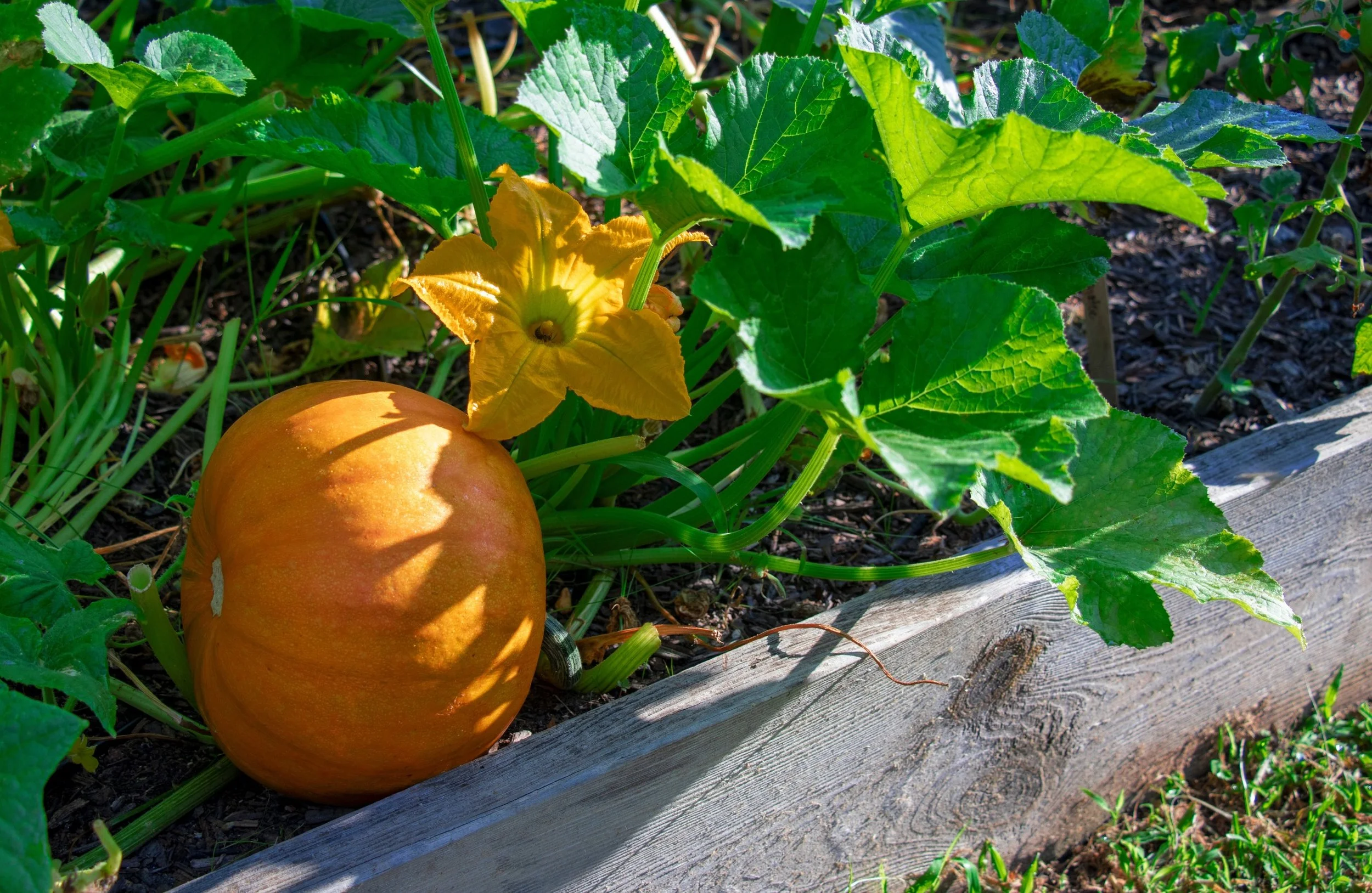
You don't need a big vegetable plot to grow pumpkins. With a large container, a small-fruited variety and a sunny spot, you can grow your own on a patio or at the edge of a paved yard. Container pumpkins won't match the giants grown on allotments, but a single plant can still give you a handful of pumpkins for cooking and carving.
Quick answer
Pick a small or bush variety and give each plant its own grow bag or a tub 45 cm or more across. Fill it with peat-free compost and set it against a warm, sunny wall. In summer, check the compost daily and water whenever it's dry. Once pumpkins start forming, add tomato feed to the watering can every 10–14 days.
Pick a variety that suits a pot
Variety matters more for pumpkins in pots than for almost any other crop. Big, trailing pumpkins can send stems several metres in every direction and need far more root space than a pot can offer.
Look for:
Mini pumpkins, like 'Jack be Little', which produce plenty of flattened, ridged fruits small enough to hold in one hand.
Bush or compact types, which stay in a tighter clump instead of trailing across the ground.
Varieties described as good for pots or small spaces on the seed packet.
Leave the giant varieties for open ground.
Container size
A pumpkin is a big, hungry plant, so give it the largest container you can. The RHS recommends one plant per grow bag, or per container at least 45 cm wide. In practice, bigger is better. A half barrel, a large tub or a deep fabric planter of 50 litres or more gives the roots room and holds water for longer.
Whatever you use, it needs holes in the base so water can drain away. Lifting the container a few centimetres off the ground stops the holes getting blocked.
Compost
Fill the container with peat-free multi-purpose compost. Mixing in some soil-based compost, such as John Innes No 3, adds weight so the pot is less likely to blow over, and helps the compost hold water and nutrients for longer. A few handfuls of well-rotted manure or garden compost in the lower part of the pot gives the roots extra food as they grow.
There's more on compost and soil in best soil for vegetable gardening in the UK
When to plant
Pumpkins in pots follow the same calendar as those in beds. Sow indoors from mid to late April and harden the seedlings off so they get used to outdoor conditions. Move them into their final container at the end of spring, once there's no longer a risk of frost. If an unexpectedly chilly night is forecast, you can move the pot against the house or cover it with fleece.
Step-by-step sowing is in when to plant pumpkins in the UK
Position
A south- or west-facing wall is the ideal spot. A warm wall gives off heat, which pumpkins love, and it also shelters them from wind. Avoid shady corners, as pumpkins in shade produce few female flowers and ripen slowly.
Managing the stems
Even compact pumpkins spread. You have three options:
Let the stems trail over the side of the pot and across the patio.
Coil them gently around the pot, holding them in place with a few short canes.
Train small-fruited types upwards onto a sturdy trellis or frame, tying the stems in as they grow. Once each fruit gets heavier, support it in a sling made from old tights or netting.
Keep large fruits on the ground or on the rim of the pot, rather than hanging from the stems.
Watering
Watering is what makes or breaks container pumpkins. A big plant in a pot can use all the water in the compost in a single hot day. From June onwards, get into the habit of feeling the compost every morning. If it's dry, keep pouring until water trickles out underneath. On the hottest days, check again in the evening. Water the compost, not the leaves, to reduce mildew.
Standing the pot in a large saucer during summer can help it hold a little extra water, but empty the saucer in wet weather. How much water pumpkins need through the season is explained in how often to water pumpkins
Feeding
Unlike pumpkins in rich garden soil, container plants soon use up the nutrients in their compost, and frequent watering washes more out. As soon as the first little pumpkins start growing, give a high-potash liquid feed, such as tomato feed, in the watering can every 10–14 days.
How many pumpkins to expect
A container plant will produce fewer fruits than one in the ground. Small-fruited varieties might still give you several pumpkins. With bigger varieties, choose the best two or three fruits and pinch off any flowers that appear afterwards, because a plant in a pot can't support more.
Harvesting
Container pumpkins are ready at the same time as those in the ground, usually in September and October, before the first frost. Look for a hard skin, deep colour and a stalk that's turning woody, then cut them with a good length of stalk. See when to harvest pumpkins
For everything else, including common problems, see how to grow pumpkins in the UK. For other crops in pots, see growing vegetables in containers
Common questions
Can you grow pumpkins in pots?
Yes. Choose a mini or bush variety, give it a grow bag or a tub 45 cm or more across, and don't let it go short of water or food.
What size pot does a pumpkin need?
The RHS suggests at least 45 cm wide, with one plant per pot. Larger containers of 50 litres or more hold water better and give bigger crops.
How many pumpkins will one plant in a pot produce?
Fewer than in the ground. Small-fruited types can give several, while for larger types it's best to keep two or three fruits.
How often should I water pumpkins in containers?
Daily through the summer, whenever the top few centimetres of compost feel dry. In a heatwave, a second watering in the evening is often needed.
Pot size, planting and feeding guidance from the RHS.