How often to water a vegetable garden
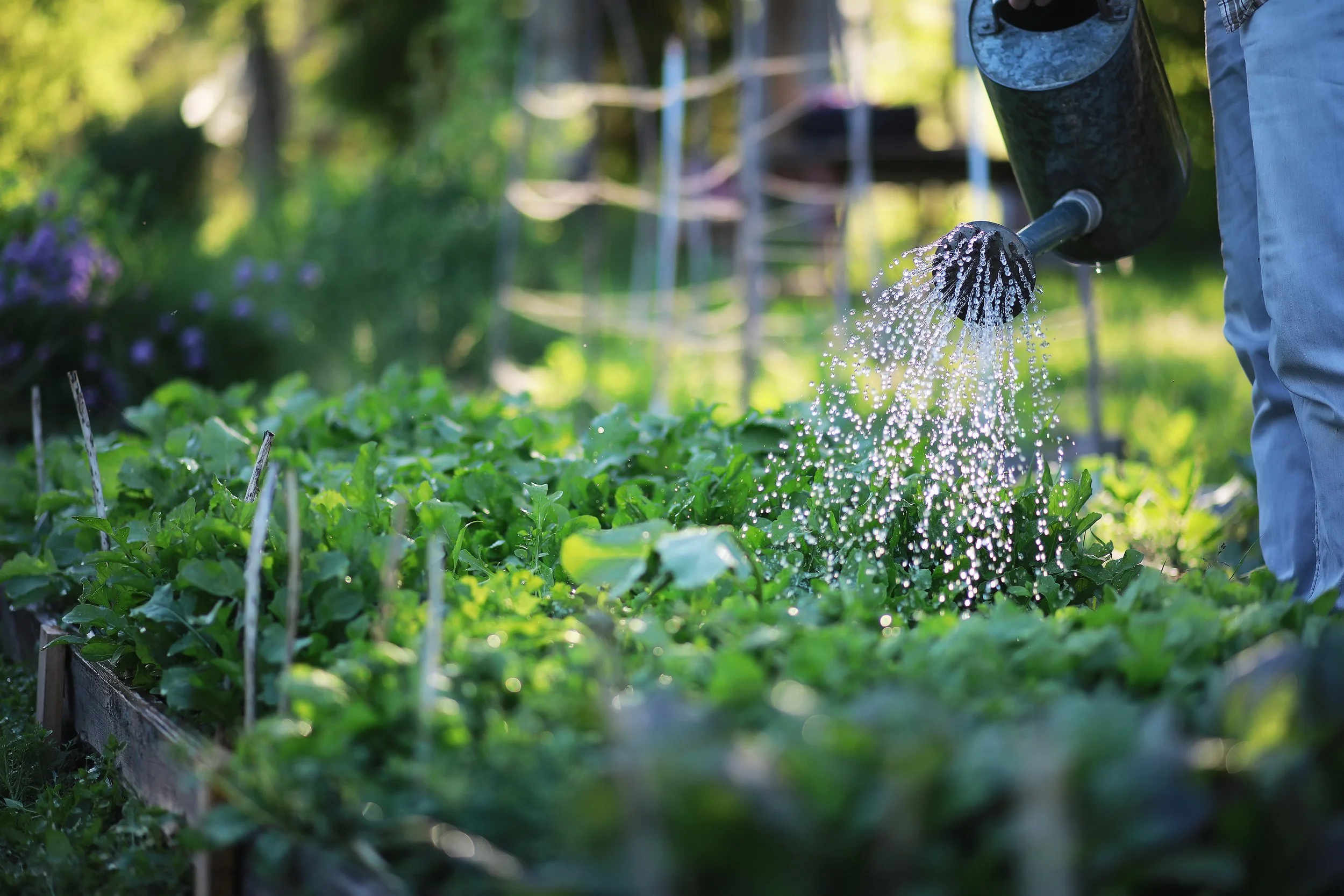
Watering is the job that worries new growers most, and the one where rigid rules help least. A fixed schedule ignores the two things that actually matter: what the weather has been doing, and what stage the crop has reached. Once you know how to check the soil and when each crop most needs a drink, watering stops being a guess.
Quick answer
Don't water to a timetable. Check the soil instead, and when the top few centimetres are dry, water thoroughly, wetting the soil right down through the root zone, then let the surface dry out before watering again. For beds in dry weather that usually works out at one or two proper soakings a week; anything in a pot will need looking at every day. Timing matters most at particular moments: when beans and peas are flowering, when potato tubers are swelling, and when cabbages and lettuces are hearting up.
How to tell when to water
Press a finger down into the soil. Dry an inch or two below the surface means water; still damp means wait. For a more reliable check on a bed, dig a small hole to spade depth and look at the soil lower down, since a dry-looking surface often sits above perfectly moist soil.
The surface tells you very little on its own. Soil that looks parched after a windy afternoon may be fine underneath, while soil under a leafy canopy can be bone dry despite looking shaded and cool.
Water deeply, not often
This is the single most useful habit to build. A thorough soak that reaches the full depth of the roots, given less frequently, beats a daily sprinkle every time.
Light watering wets only the top centimetre or so. Roots follow the moisture upwards, sit near the surface where the soil dries fastest, and the plant becomes dependent on constant watering. A deep soak encourages roots to grow downwards, where soil stays damp for longer and plants can look after themselves through a dry spell.
In short: soak it properly, then wait for the top to dry before the next one.
When each crop most needs water
Plants don't need water evenly across the season. At certain points a dry patch will cost you the crop; at others it hardly registers. If water is short, this is where to spend it.
Leafy crops such as cabbage, lettuce and chard need moisture at every stage. With limited water, prioritise cabbages and lettuces at the point their hearts start to form, and give those a proper drenching.
Root crops such as carrots, beetroot and parsnips want a drink before the ground dries out, which in a rainless spell means around every fortnight.
Onions and leeks need water while they're establishing and during dry spells, but little else.
Potatoes benefit most from a good watering every 10 to 14 days once the tubers reach marble size.
Peas and beans need plenty of water at flowering, which is when the pods set, and again a fortnight after flowering starts.
Tomatoes, peppers and aubergines want steady moisture right through flowering and fruiting, as irregular watering causes splitting and blossom end rot.
Courgettes, squash, pumpkins and cucumbers need constant moisture from planting all the way to harvest.
Seeds and young plants
Newly sown seed and young plants have small, shallow roots and no reserves, so they need consistent moisture in a way established plants don't. Watering along the drill before sowing puts moisture precisely where the seed lands; after that, keep the top damp until the row is up and away.
Plants that have just been transplanted need the same care for a couple of weeks while their roots move out into the surrounding soil. Watering well before and after planting, and planting in the evening or on a dull day, both help them settle.
Containers
Pots and growing bags are a different job altogether. There's far less compost to hold water, so they dry out quickly, and in warm weather they may need watering daily, sometimes twice on the hottest days.
Feel the compost down where the roots sit rather than judging by the top, and keep going until water appears at the drainage holes. Larger containers hold moisture for longer and are much less demanding, which is worth knowing before you buy small pots. There's more in growing vegetables in containers
The best time of day
Morning is best. Water given early is there for the plant during the hours it needs it, and much less of it disappears into the air than at midday.
Evening watering works too and is often more practical, but it leaves foliage damp overnight, which encourages mildew and other fungal problems, and damp soil overnight is exactly what slugs like. Whichever you choose, direct the water onto the ground and keep it off the foliage.
Making water go further
A few things reduce how much watering you need to do at all:
Mulch. A layer of compost or other organic matter about 5 to 7.5 cm deep, spread after watering, holds moisture in and suppresses weeds at the same time.
Improve the soil. Organic matter dug in or spread on top helps soil hold water, and a no-dig approach keeps that structure intact.
Weed. Weeds drink the water you're providing for your crops.
Collect rainwater. A water butt saves mains water and rainwater is better for plants.
Consider leaky hose or drip irrigation for beds you water regularly, as it puts water at the roots with very little waste.
Too little or too much?
Both problems can look similar, since a plant with drowned roots wilts exactly like a thirsty one. The soil tells you which you're dealing with: dry means too little, wet means too much.
Too little: wilting, especially by morning; dry soil below the surface; slow growth; small or bitter crops; leafy crops running to seed.
Too much: yellowing leaves; soft, limp growth; soil that stays wet; a sour smell; wilting despite wet soil.
The full symptom lists are in signs of underwatering and signs of overwatering. For drooping plants, try why vegetable plants wilt; for beds that never seem to dry, how to fix waterlogged soil
Watering each crop
Every vegetable has its own rhythm. For the detail on a particular crop, choose from our guides:
Roots and bulbs
Peas, beans and sweetcorn
Fruiting crops
Leafy crops and brassicas
Just starting out? How to start a vegetable garden in the UK sets out the basics. If crops are struggling for other reasons, why vegetables aren't growing works through the possibilities.
Common questions
How often should I water a vegetable garden?
There's no fixed answer, because it depends on weather, soil and crop. Feel the soil, and water once the top inch or two has dried out. In a dry spell that tends to mean one or two good soakings a week in beds, and daily attention in pots.
Is it better to water every day or less often?
Less often but thoroughly. Daily sprinkling keeps roots near the surface, where the soil dries fastest. A deep soak encourages deeper rooting and more resilient plants.
What time of day should I water vegetables?
Morning, ideally. The plant gets the benefit through the day, and far less is wasted. Evening is workable, though foliage left wet overnight invites fungal problems and slugs.
How do I know if I'm overwatering?
Yellowing leaves, limp growth and soil that stays wet all point to too much water. If a plant is wilting, check the soil first: wet soil plus wilting usually means the roots are drowning, not thirsty.
Do vegetables in pots need watering every day?
Often, yes, in warm weather, and sometimes twice a day in a heatwave. Larger containers hold moisture longer and need less attention.
Watering stages, mulching depths and technique based on RHS guidance.