Why Cauliflower Doesn’t Form Heads (and How to Fix It)
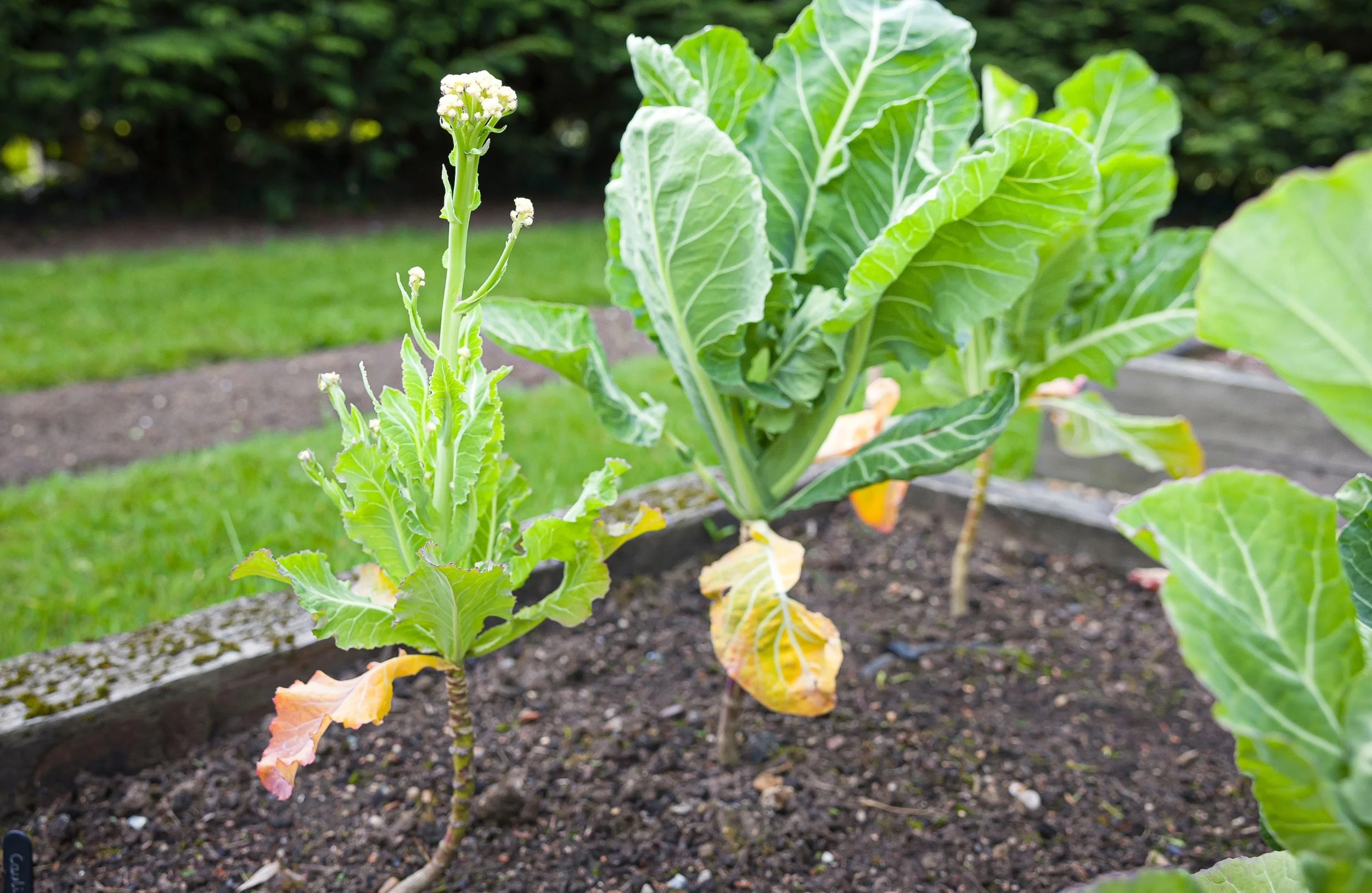
Cauliflower can be frustrating. Plants grow into big, healthy-looking clumps of leaves, but when you look in the middle there's nothing there, or just a tiny head the size of a coin. Nearly always, the plant had a setback at some point in its growth. Cauliflower reacts to stress by making a small, early head, or none at all.
Quick answer
Cauliflower usually fails to head because its growth was checked: it was planted out too late, dried out, grew in loose or hungry soil, or was hit by a cold spring or a hot spell. Plant out at about six weeks old into firm, rich soil, space plants 45–70 cm apart, and keep the soil damp, especially once the head starts to form. Heads that turn yellow, brown or loose are a separate problem, usually sun, frost or leaving them too long.
What's wrong with your cauliflower?
Tiny heads the size of a coin: see "Planted out too late", "Dry soil" and "Cold or hot weather".
Big plant, no head at all: see "Not ready yet" and "Hungry soil".
Narrow, strap-like leaves and no head: see "Acid soil".
Plants wilting and not growing: see "Root damage".
Heads turning yellow or brown: see "Sun and frost damage".
Heads loose, grainy or separating: see "Left too long".
Planted out too late
Young cauliflower left in small pots or modules for too long becomes pot-bound. Once its roots run out of room, it gets stressed and often makes a button head soon after planting out.
Fix it: plant out at about six weeks old, when plants are 10–15 cm tall. Water them the day before moving, disturb the roots as little as possible, and harden off indoor-raised plants for a week or two first.
For more detail, see how to harden off seedlings
Dry soil
Cauliflower needs soil that stays damp through its whole life. A dry spell, especially as the head starts to form, is one of the most common causes of small or button heads.
Fix it: water thoroughly in dry weather and don't let the soil dry out as heads develop. A thick mulch of compost around the plants helps hold moisture in.
For more detail, see how often to water cauliflower
Loose soil
Like cabbages, cauliflower needs firm ground. In loose, freshly dug soil, plants rock in the wind and struggle to root well, and head formation suffers.
Fix it: dig compost in a few months before planting so the soil can settle, or tread the bed down well just before planting. Set each plant with its lowest leaves at soil level and firm the soil around it.
Hungry soil
Cauliflower is a heavy feeder. In thin, poor soil, plants stay small and may never build up enough strength to make a head.
Fix it: dig in about two buckets of well-rotted manure or garden compost per square metre before planting. On poor ground, give a nitrogen-rich feed before the heads start to form.
For more detail, see best soil for vegetable gardening in the UK
Too crowded
Cauliflowers planted too close compete for water, food and light, and none of them get enough to make a full head.
Fix it: space summer and autumn types 45–60 cm apart, and winter types 70 cm apart each way. Only mini cauliflowers should go as close as 15 cm.
Cold or hot weather
A cold spring or a spell of hot weather can check growth and trigger button heads, even when everything else is right.
Fix it: sow each type at the right time for its season, protect early plantings with fleece in a cold snap, and keep plants well watered in hot spells.
For sowing times by type, see when to plant cauliflower in the UK
Acid soil
On acid soil, cauliflower can develop "whiptail". The leaves grow narrow and strap-like, and no proper head forms. Acid soil also encourages clubroot.
Fix it: test your soil and aim for a pH of about 6.5. If it's acidic, lime the bed the winter before planting.
Root damage
Plants that wilt on warm days and stop growing often have a problem underground. Cabbage root fly maggots eat the roots of young plants, and clubroot makes roots swell into knobbly lumps.
Fix it: cover plants with insect-proof mesh from planting out. For clubroot, rotate crops, lime acid soil and start plants in modules so they go out with a strong root system. Resistant varieties such as 'Clapton' are available.
Not ready yet
Cauliflower is slow. Summer types take about three months, and winter types six months or more. Plants can look big and leafy for weeks before a head appears.
Fix it: check the sowing date and type before worrying. Gently part the inner leaves to look for a small white curd forming in the centre.
Sun and frost damage
Heads that do form can be spoiled as they develop. Strong sun turns white heads yellow, and hard frost turns them brown.
Fix it: snap a few outer leaves and fold them over the head in summer. In winter, gather the leaves up and tie them loosely over it.
Left too long
A head that looked perfect can turn loose, grainy and bitter within days, especially in warm weather.
Fix it: check heads every few days once they start to form, and cut them while they're still firm and tight.
For more detail, see when to harvest cauliflower
Cauliflower in containers
Pot-grown cauliflower dries out and runs short of food quickly, which makes button heads more likely. Mini varieties are the best choice for pots, and they need steady watering.
For more detail, see growing cauliflower in containers
For the whole growing season, see how to grow cauliflower in the UK. For related crops, see why cabbage doesn't form heads and why broccoli doesn't form heads
Common questions
Why is my cauliflower not forming a head?
Usually because its growth was checked by late planting, dry soil, loose or poor soil, or a cold or hot spell. It can also simply not be ready yet, as winter types take six months or more.
What causes small button heads on cauliflower?
Button heads form when a plant is stressed, often after being left too long in its pot before planting out or drying out as the head forms. Steady growth prevents them.
Will my cauliflower still form a head?
If the plant is still young and growing, it may. Keep it watered and fed. If a small button head has already formed, it won't grow much bigger, so cut it and use it.
Why is my cauliflower turning yellow?
Strong sun on the head turns white cauliflower yellow. Fold a few outer leaves over the head to shade it as it develops.
Causes, spacing, soil and care based on RHS guidance.