How to Grow Cauliflower in the UK
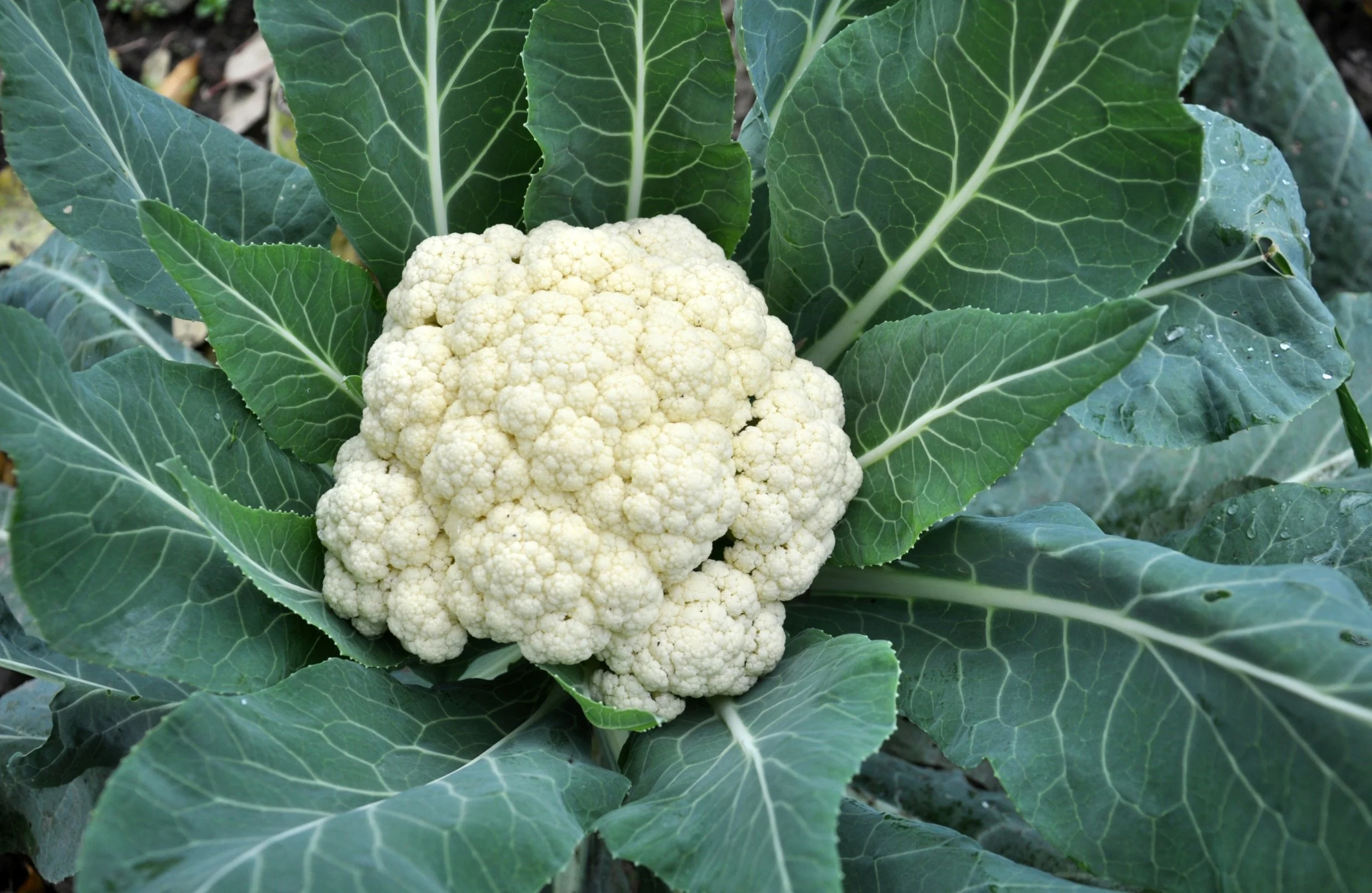
Quick facts
Types: early summer, summer/autumn and winter/spring, plus mini cauliflowers
Sow: from late winter to early summer, depending on the type
Plant out: at about six weeks old, when plants are 10–15 cm tall
Spacing: 45–60 cm for summer and autumn types, 70 cm for winter types, 15 cm for minis
Time to harvest: about three months for early types, six months or more for winter types
Key moment: keeping plants growing steadily with no setbacks, from sowing to harvest
Cauliflower has a reputation for being tricky, but most problems trace back to one cause. The plant needs to grow without interruption. If it's moved too late, left to dry out or planted into loose soil, it can react by making a tiny, premature head instead of a full one. Give it firm ground, steady water and a quick start, and it's a very rewarding crop.
Cauliflower types and when to grow them
Early summer cauliflower: sown indoors in mid to late winter, ready in early summer.
Summer and autumn cauliflower: sown in spring, ready from late July to November.
Winter and spring cauliflower: sown in late spring or early summer, ready from late winter into early summer. These are the slowest, taking six months or more.
Mini cauliflower: fast-growing varieties picked at about tennis-ball size, planted close together.
For sowing times by type, see when to plant cauliflower in the UK
Choosing a cauliflower variety
The RHS recommends these varieties from its trials:
'Clapton': an autumn cauliflower with resistance to clubroot
'Triomphant': a winter variety for Christmas harvests
'Candid Charm': a quick-growing mini cauliflower for summer
'Graffiti': a summer and autumn variety with purple heads
'Veronica': a romanesco type with pointed green florets
Preparing the ground
Cauliflower needs a sunny spot with deep, rich soil that holds moisture but still drains well. Grow it with cabbages and other brassicas as part of a crop rotation.
Dig in about two buckets of well-rotted manure or garden compost per square metre, ideally a few months before planting. Cauliflower likes firm ground, so tread the bed down well and rake the surface level before planting. Aim for a soil pH of about 6.5. If your soil is acidic, lime it the winter before, which also helps keep clubroot away.
For more detail, see best soil for vegetable gardening in the UK
Sowing cauliflower seeds
Indoors: sow one seed per module, about 1.5 cm deep, in seed compost. Keep them somewhere bright at 12–22°C. Seedlings appear in about two weeks and are ready to plant out at around six weeks old.
Outdoors: make a drill about 1.5 cm deep. Then either:
Sow into a seedbed: space seeds 10–15 cm apart and move the young plants later, or
Sow where they'll grow: sow three seeds every 45–70 cm (15 cm for minis), then keep the strongest seedling at each spot.
Starting in modules is the more reliable choice, because the young plants move with their roots intact and suffer less of a setback.
Planting out cauliflower
Plant out when young plants are 10–15 cm tall, at about six weeks old. Don't leave them in their modules much longer than this, as pot-bound plants are prone to making small early heads. Harden off plants raised indoors first.
For more detail, see how to harden off seedlings
Water the plants well before moving them.
Plant them deeper than they were growing, with the lowest leaves at soil level.
Firm the soil well around each stem and water thoroughly.
Space summer and autumn types 45–60 cm apart in rows 60 cm apart. Space winter types 70 cm apart each way, and minis 15 cm apart each way.
Cover the bed with insect-proof mesh straight away to keep off pigeons, caterpillars and cabbage root fly. Young plants are also a favourite of slugs.
For more detail, see slugs eating seedlings
Watering, feeding and mulching
Cauliflower needs soil that stays damp but not waterlogged, all the way through its growth. This matters most as the head starts to form. A dry spell then is one of the main causes of small or button heads.
For more detail, see how often to water cauliflower.
A thick mulch of compost or manure around the plants helps keep the soil moist and the weeds down. On poorer soil, a nitrogen-rich organic feed before the heads start to form helps plants bulk up.
Protecting the heads
As the head develops, it needs shading from strong sun, which turns white heads yellow, and protection from hard frost, which turns them brown. Snap a few outer leaves and fold them over the head in summer. In winter, gather the leaves up and tie them loosely over it.
Growing cauliflower in containers
Mini cauliflowers are the best choice for pots. Up to four fit in a container about 40 cm across, filled with multi-purpose compost. Keep watering steady, as pots dry out quickly.
For more detail, see growing cauliflower in containers
Harvesting cauliflower
Cut the head when it's firm and tight, before the florets start to separate. Check every few days once the head starts to form, as it can go past its best quickly.
For more detail, see when to harvest cauliflower
Common cauliflower problems
Button heads: tiny heads that form too early. Caused by a setback such as late planting, loose soil, dry spells, a cold spring or a hot summer.
Yellow or brown heads: too much sun or frost on the curd. Fold leaves over the head.
Clubroot: swollen roots and wilting plants. Rotate crops and lime acid soil.
Pigeons, caterpillars and cabbage root fly: mesh from planting keeps all three off.
Whitefly, mealy aphid and flea beetle: small insects under leaves, or tiny holes in young leaves.
If your plants aren't producing proper heads, see why cauliflower doesn't form heads
Common questions
Is cauliflower hard to grow?
It's less forgiving than cabbage, but not difficult. The key is steady growth: firm, rich soil, planting out at about six weeks old, and never letting the soil dry out.
How long does cauliflower take to grow?
About three months for early summer types, three to six months for summer and autumn types, and six months or more for winter types.
What are button heads on cauliflower?
Small, early heads that form when the plant has had a setback, such as being planted out late, drying out, or growing in loose soil. Steady growth prevents them.
How far apart should cauliflower be planted?
Space summer and autumn types 45–60 cm apart, winter types 70 cm apart each way, and mini cauliflowers 15 cm apart.
Timings, spacing, varieties, pests and care based on RHS guidance.