Why Potato Leaves Turn Yellow (and What to Do)
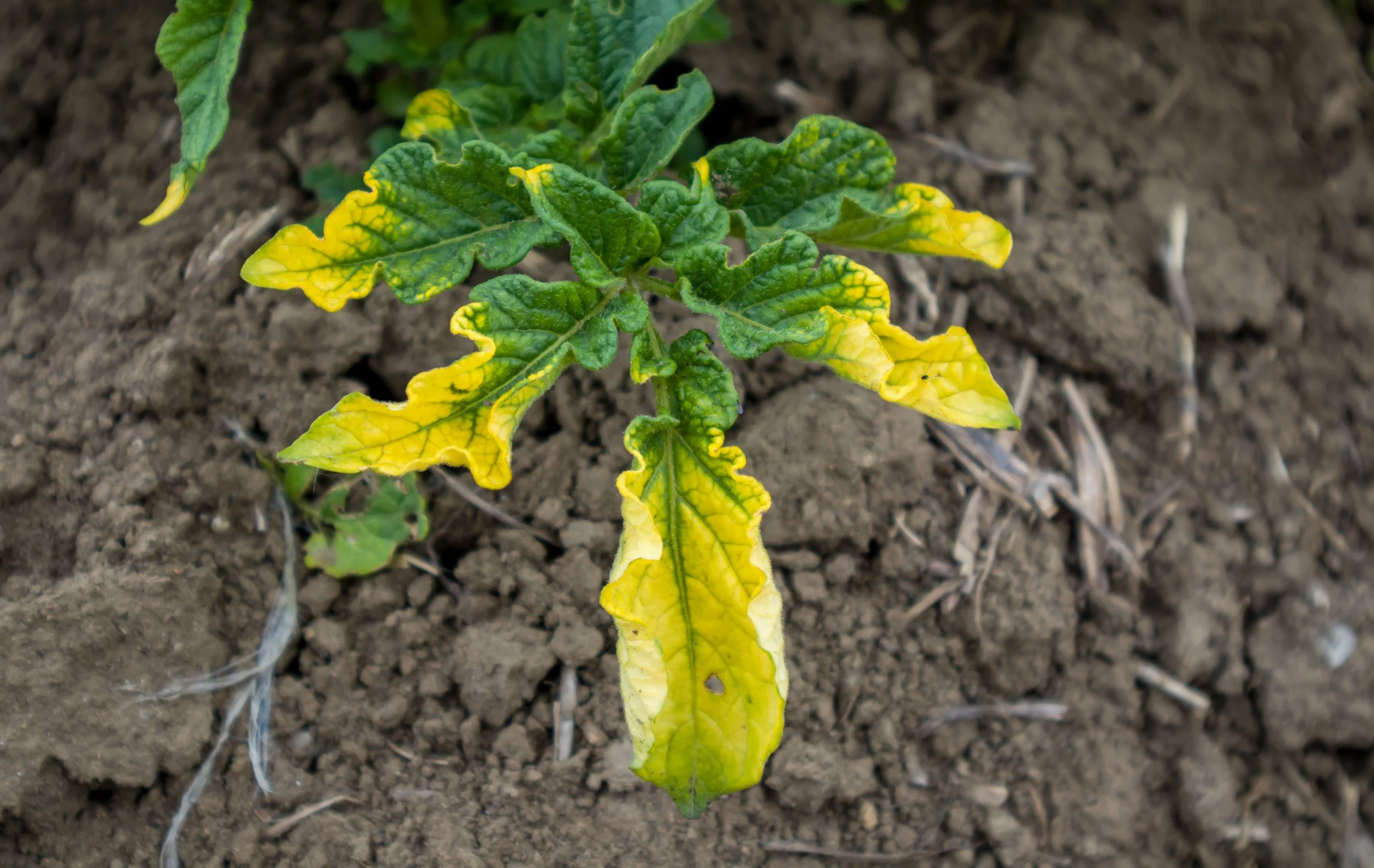
Yellow leaves on potato plants can mean anything from "your potatoes are ready" to "something needs attention". The key to working out which is to look closely at when the yellowing started, which leaves are affected, and what the rest of the plant looks like. Most causes are easy to spot once you know what to look for.
Quick answer
If the leaves yellow and die back gradually in late summer, it's almost certainly the plant finishing its season, and your potatoes are ready or nearly ready. Yellowing earlier in the season is usually down to watering, a shortage of nutrients (often magnesium), or a soil pest or disease. Brown, rapidly spreading patches are a different problem altogether: that's blight.
Quick diagnosis: what are you seeing?
Whole plant fading gradually in late summer: natural dieback, so get ready to harvest.
Yellow between the veins of older, lower leaves: magnesium deficiency.
Whole plant pale and weak: nitrogen shortage, waterlogging or drought.
Yellowing and wilting from the bottom up, with poor growth, on a plot that grows potatoes often: potato cyst nematode.
Individual stems yellowing, with black, slimy rot at the base: blackleg.
Brown patches that spread fast in warm, wet weather: blight.
1. Natural dieback before harvest
Every potato plant yellows at the end of its life. Once the potatoes underneath have finished growing, the leaves gradually lose their colour, flop and wither. It happens from around July for early varieties and from late summer for maincrops.
There's nothing to fix. It simply means the crop is ready or close to it. For maincrops you want to store, wait until the leaves have died back, then cut the stems off and give the potatoes about 10 days in the ground before lifting, so the skins toughen.
For more, see when to harvest potatoes.
2. Too much water
If the plant is young, the leaves are pale all over and the soil stays soggy, the roots are probably struggling for air. Waterlogged roots can't take up nutrients properly, so the whole plant turns a washed-out yellow-green.
Hold off watering until the top few centimetres of soil are dry, and improve drainage next year by digging in plenty of organic matter or growing in raised beds.
3. Too little water
Thirsty potato plants yellow and wilt too, especially in hot weather and in pots or grow bags. The difference is that the soil is dry and the leaves perk up after a good soak.
Water deeply during dry spells, particularly once the plants flower, as that's when the potatoes are forming. See how often to water potatoes
4. Magnesium deficiency
This is one of the most common causes of yellowing in the middle of the season. Look at the older, lower leaves: if the area between the veins is turning yellow while the veins stay green, sometimes with a reddish-brown tinge, magnesium is running short. Badly affected leaves go brown and drop early.
It's most common on light, sandy soils, and it can be triggered by using a lot of high-potash fertiliser, which makes it harder for plants to take up magnesium.
To fix it longer term, work Epsom salts (magnesium sulphate) into the soil at around 30 g per square metre.
5. Nitrogen shortage and poor soil
If the whole plant is pale, yellowish-green and slow to grow, rather than showing patterns on individual leaves, it may simply be hungry. This is most likely on poor soil that wasn't improved before planting. Adding garden compost or well-rotted manure before your next crop is the best long-term fix, and plants in pots benefit from regular feeding.
You can read more in best soil for vegetable gardening in the UK
6. Potato cyst nematode
Potato cyst nematodes are microscopic soil pests that feed on potato roots. Affected plants look weak, yellow and wilt from the lower leaves upwards, and the crop is small. It's a particular problem on allotments and plots where potatoes or tomatoes have been grown repeatedly in the same soil.
If you lift a plant and look at the roots closely, ideally with a magnifying glass, you may see tiny round cysts the size of a pinhead, cream, yellow or brown.
There's no cure once they're in the soil, but you can keep numbers down. Rotate your crops so potatoes and tomatoes don't return to the same spot for at least five or six years, and lift the crop promptly once it's ready rather than leaving plants to keep growing.
7. Blackleg
Blackleg is a bacterial disease that usually affects individual stems rather than the whole row. The stem turns yellow and the plant looks stunted, and at soil level you'll find a soft, black, slimy rot creeping up the stem.
Pull out and bin affected plants, rather than composting them, and always plant certified seed potatoes, as the disease is often carried in the seed tubers.
Is it blight?
Blight usually causes brown rather than yellow leaves, but it's worth ruling out because it spreads so fast. Look for dark brown, soft patches that appear in warm, damp weather, usually from mid-summer, sometimes with a fuzzy white edge on the underside of the leaf. Within days, whole plants can collapse.
If you spot it, cut the foliage down to the ground straight away and remove it, then leave the potatoes in the soil for a couple of weeks before lifting.
For more, see how to grow potatoes in the UK
Cold weather
A sudden cold snap early in the season can make young leaves look pale or yellowish. If the weather warms up and new growth comes through green, there's nothing to worry about.
When to worry
Take a closer look if lots of leaves turn yellow quickly in early or mid-summer, if the plants stop growing, or if you see spots, brown patches or rotting stems. Early yellowing combined with any of these usually points to one of the problems above rather than natural dieback.
If your plants yellowed and the crop was poor, see why potatoes don't grow.
Common questions
Can I still eat potatoes from plants with yellow leaves?
Usually, yes. If the yellowing is natural dieback, a watering problem or a nutrient shortage, the potatoes are fine to eat. Check them for rot if blight or blackleg was the cause, and never eat potatoes that have turned green.
Why are my potato leaves turning yellow in July?
Magnesium shortage is one of the most common reasons in the middle of summer. Check the older leaves for yellowing between the veins. Watering problems and, on regularly used plots, potato cyst nematode are the other likely causes.
Do yellow leaves mean my potatoes are ready?
Once the leaves have mostly died back, the potatoes have stopped growing. You can lift earlies once the plants have flowered. For maincrops you want to store, cut the dead foliage off and wait about 10 days before digging so the skins firm up.
Will yellow potato plants recover?
Yes, if it's mild. Improving drainage, watering in dry spells or correcting a magnesium shortage usually lets the plant carry on and produce a crop. Leaves that are already badly damaged won't recover, but new growth should stay healthy.
Diagnosis checked against RHS guidance.