How to Grow Potatoes in the UK

There's something genuinely exciting about growing potatoes. You plant a few wrinkly tubers in spring, watch them turn into leafy plants, and then dig down to find a handful of fresh potatoes under each one. They're forgiving, productive and one of the best crops for a first-time grower.
You don't need a big plot either. A short row, a raised bed or even a large bag on the patio is enough for a proper harvest.
Quick facts
Plant: late March (first earlies) to early May (maincrop), a little later in cold areas and earlier in mild ones
Depth: about 15 cm
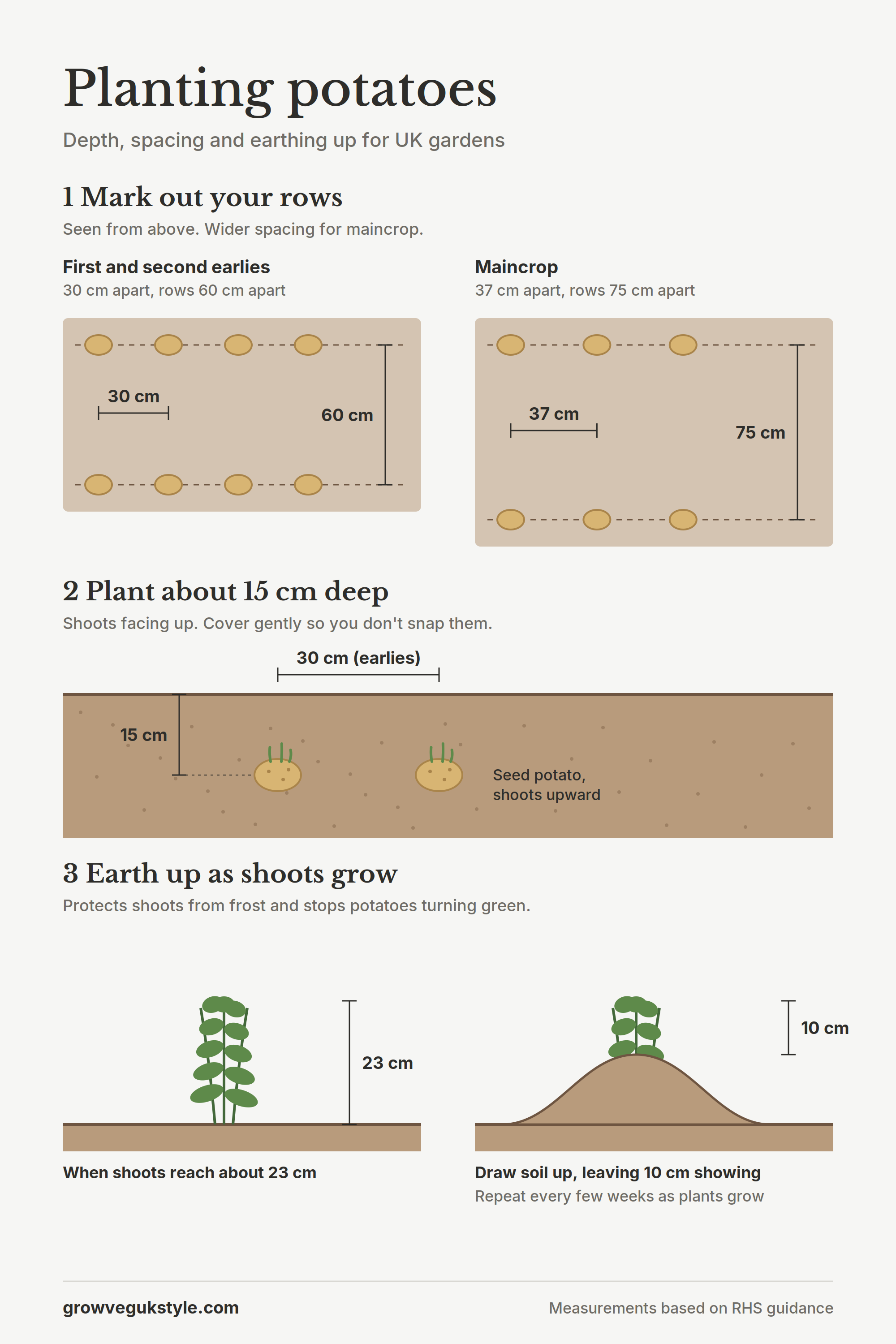
Spacing: earlies 30 cm apart in rows 60 cm apart; maincrop 37 cm apart in rows 75 cm apart
Harvest: June–July (first earlies), July–August (second earlies), late August–October (maincrop)
Position: sunny and open, away from frost pockets
Containers: at least 30 cm wide and deep, one seed potato per 30 cm of width
Choose your type of potato
Potatoes are sorted into groups by how long they take to grow, and knowing which group you've bought makes everything else easier to plan.
First earlies: plant around late March and dig from June into July. Try 'Maris Bard' or 'Casablanca'.
Second earlies: plant in early to mid-April and dig through July and August. Try 'Charlotte' or 'Nadine'.
Maincrop: plant from mid-April into early May and dig from late August into October. Try 'Maris Piper' or 'Sarpo Mira'.
Every variety on that list holds the RHS Award of Garden Merit, so they've proven themselves in trials.
If it's your first go, start with earlies. They can be ready in around 12 weeks, suit pots and bags, and are usually dug before blight has a chance to strike. Maincrops give you bigger potatoes and more of them, and they're the ones to grow for storing through winter.
Always plant proper seed potatoes from a garden centre or supplier. These are certified free of viruses, whereas old potatoes from the kitchen can carry diseases into your soil.
When to plant potatoes
Earlies go in from late March, second earlies a couple of weeks later, and maincrops from mid-April into early May. Gardeners in colder parts of the UK should wait a little longer, while those in mild areas can start a bit sooner. If the soil is cold and sticky, hold off for a week or two.
Early varieties benefit from chitting, which just means letting them sprout before planting. Set the seed potatoes in an egg box with the end that has the most eyes facing up, and leave them somewhere light, cool and frost-free. Start in late January if you live somewhere mild, or as late as early March in colder areas. After four to six weeks you'll have short, sturdy shoots and a crop that's ready a few weeks sooner. Chitting maincrops makes little difference, so you can plant those straight from the bag.
Where to grow potatoes
Potatoes grow best in:
garden beds
raised beds
large containers
grow bags
They need full sun and a spot where cold air doesn't collect, because frost can blacken young shoots as late as May. Move them to a fresh part of the plot each year so soil pests and diseases don't have a chance to build up.
Containers and grow bags are a great way to start, and harvesting is as easy as tipping them out. See growing potatoes in containers or grow bags.
Soil requirements
Potatoes are hungry plants. Work plenty of garden compost or well-rotted manure into the bed before planting, and if you can do it the autumn or winter before, even better.
Plants in the ground rarely need extra feeding after that. Potatoes in pots are different, because the compost runs out of nutrients within a few weeks, so add a general-purpose fertiliser at planting time or give a liquid feed as the season goes on.
How to plant potatoes
Dig a trench roughly 15 cm deep.
Lay the seed potatoes along the bottom, shoots pointing up.
Space earlies 30 cm apart with 60 cm between rows, and maincrops 37 cm apart with 75 cm between rows.
Rake the soil back over them gently so you don't snap the shoots, then water.
As the plants grow, you'll need to earth them up. When the leafy shoots are around 23 cm tall, pull soil up around the stems until only the top 10 cm is showing. Do it again every few weeks, building a ridge along the row. This does two jobs: it shields the shoots from late frosts, and it keeps the new potatoes buried in the dark so they don't turn green.
If a frost is forecast once the shoots are up, throw a cloche, hessian, straw or a layer of soil over them for the night.
Watering potatoes
The most important time to water is when the plants come into flower, because that's when the potatoes underneath are forming. In dry spells, give them a proper soak rather than a quick sprinkle. Pots and bags need checking even after rain, as the leaves act like an umbrella and stop much of it reaching the compost.
For watering at each growth stage, see how often to water potatoes.
Common problems
Blight: brown patches appear on the leaves and spread fast in warm, damp summers. It's less of a problem for earlies and in dry years. Caught early, the potatoes underneath are usually still fine to dig up and eat, though blighted potatoes won't store.
Slugs: they burrow into potatoes, especially maincrops left in wet ground in autumn. Dig your crop once it's ready rather than leaving it in.
Green potatoes: caused by light reaching the tubers. Keep earthing up, and never eat green potatoes, as they're poisonous.
Scab: rough, corky patches on the skins. It's mostly cosmetic, and the potatoes are fine to eat once peeled.
See why potato leaves turn yellow and why potatoes don't grow.
Harvesting potatoes
Earlies are usually ready once the plants flower or the flower buds fall, when the potatoes are roughly the size of an egg. Brush a little soil aside to peek before you dig the whole plant. Maincrops can be lifted from late summer for eating straight away.
If you want to store maincrops, wait until the leaves have yellowed, then cut all the stems off at ground level and leave the potatoes in the soil for 10 days so their skins toughen up. Choose a dry day to lift them, let them sit on top of the soil for an afternoon so the skins dry, then knock off any loose earth. Pack them into breathable sacks, such as paper or hessian, and keep them somewhere cool, dark and frost-free. Look them over now and then and remove any that are going soft.
When digging, push the fork in a good 30 cm from the stem so you don't spear the crop.
For more, see when to harvest potatoes.
Beginner tips
Potatoes are one of the most forgiving vegetables you can grow. Start with certified seed potatoes, choose earlies for your first year, plant in a sunny spot with plenty of compost, water well once the plants flower, and earth up as they grow.
A simple first-year plan: chit in February, plant first earlies in late March, and dig your first new potatoes in June.
Common questions
Do I need to chit potatoes?
It's not essential, but it's worth it for earlies. Chitted seed potatoes get growing faster and give you a crop a few weeks sooner. Maincrops grow over such a long season that chitting makes little difference.
Can I plant potatoes from the supermarket?
It's best not to. Seed potatoes are grown specifically for planting and certified free of viruses. Potatoes from the shop can carry diseases that then build up in your soil.
Why are my potatoes green?
Green patches mean light has reached the potatoes while they were growing or in storage. Earthing up and storing in the dark prevent it. Don't eat green potatoes, as they're poisonous.
When are potatoes ready to harvest?
Earlies are usually ready when the plants flower, roughly 12 weeks after planting. Maincrops are ready from late summer, and for storing, wait until the leaves turn yellow.
Planting dates, spacing and varieties based on RHS guidance.