Why Leeks Don’t Grow (and How to Fix It)
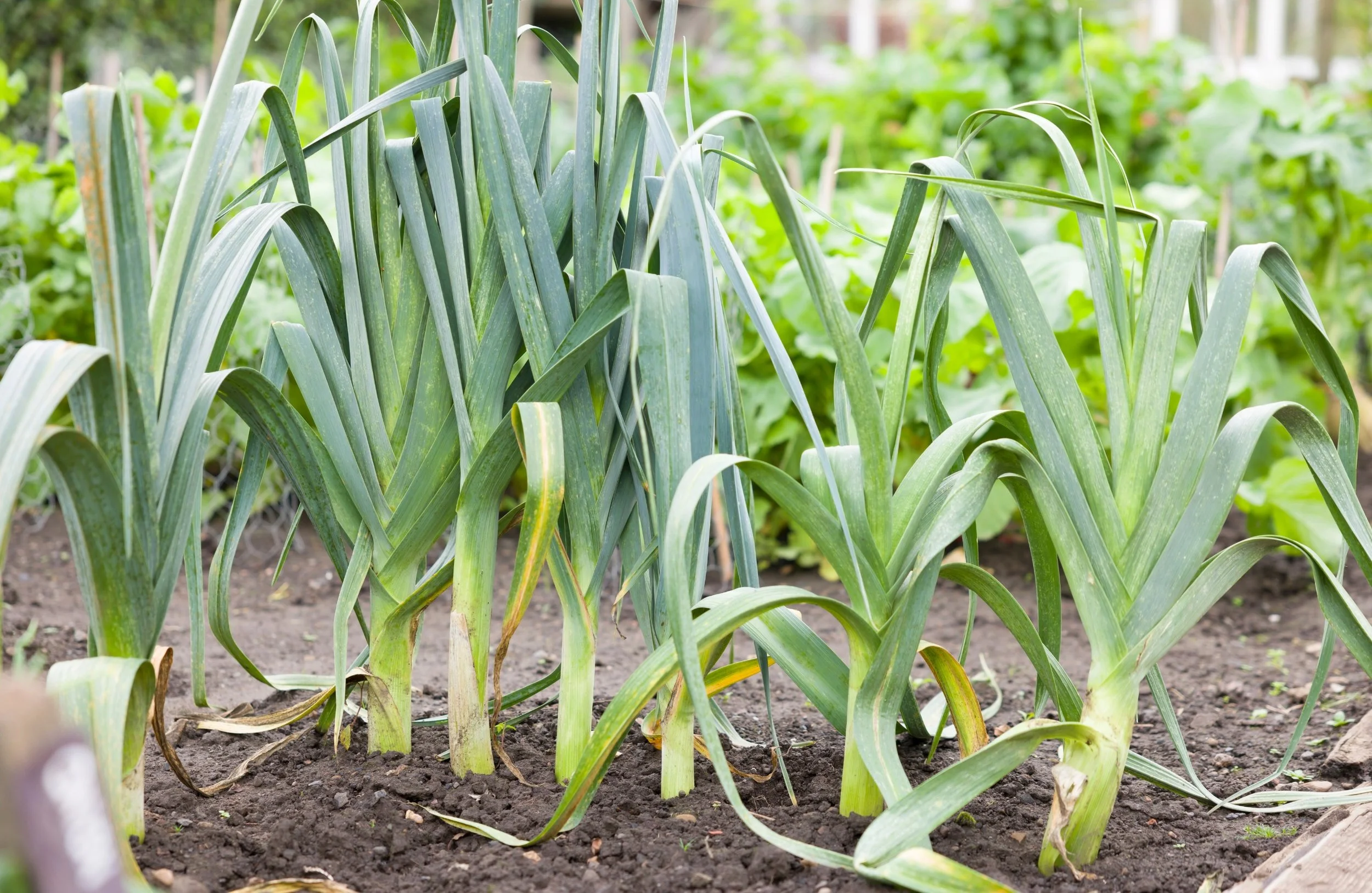
Leeks are one of the most dependable winter vegetables, standing in the ground from autumn into spring, ready to lift whenever you need them. But they're slow growers, and it's easy to end up with thin, pencil-like stems instead of chunky leeks, or plants damaged by rust or pests. Most problems come down to a few simple things, and nearly all are easy to avoid next time.
Quick answer
Leeks usually stay thin because they were sown too late, planted out too small, crowded together, or grown in poor or dry soil. Sow in March or April, plant out when the seedlings are about as thick as a pencil, and space them 15–20 cm apart in rich soil. Keep young plants watered until they're established. Orange spots on the leaves are leek rust, which looks alarming but rarely ruins the crop.
What's wrong with your leeks?
Stems are thin and spindly: see "Sown too late", "Planted out too small" and "Too crowded".
Plants are slow and pale: see "Hungry soil" and "Dry soil after planting".
Short white stems: see "Not earthed up".
Bright orange spots on the leaves: see "Leek rust".
Tunnels or maggots in the stems: see "Allium leaf miner and leek moth".
A tall flower stalk in spring: see "Bolting".
Yellowing, wilting plants with rotten roots: see "Onion white rot".
Sown too late
Leeks take a long time to reach full size, often around six months. A sowing made in May or June simply runs out of growing time, and the stems are still thin when autumn slows everything down.
Fix it: sow outdoors in March or April, or indoors from late winter for an earlier crop. If you're late, grow them as baby leeks, which are ready in a couple of months. Sowing dates are in when to plant leeks in the UK
Planted out too small
Tiny seedlings moved into their final positions struggle to establish and often stay thin.
Fix it: wait until young leeks are about 20 cm tall and roughly as thick as a pencil before planting them out. Seedlings raised indoors usually reach this size after about eight weeks.
Too crowded
Leeks need room to swell. Grown too close together, they compete for water and nutrients and all stay thin.
Fix it: space standard leeks 15–20 cm apart in rows 30 cm apart. If you'd like lots of small, tender leeks, you can plant them closer, around 10 cm apart, and harvest them young.
Hungry soil
Leeks are hungry plants. In thin, poor soil, they grow slowly and never reach a good size.
Fix it: add plenty of organic matter to the bed before the leeks go in. The RHS recommends roughly two buckets of rotted manure or compost for each square metre. There's more on preparing beds in our soil guide
Dry soil after planting
Young leeks planted into dry ground can go weeks without growing.
Fix it: plant each leek into a deep hole made with a dibber, then fill the hole with water rather than soil. Gardeners call this puddling in: the water washes a little loose soil down around the roots and settles them. Keep young plants watered until they're growing strongly. After that, they only need water in long dry spells. The full routine is in how often to water leeks
Not earthed up
The long white part of a leek, called the shank, only forms where the stem is kept out of the light. Leeks planted shallowly and never earthed up tend to be mostly green, with only a short white base.
Fix it: plant into holes about 15 cm deep, then draw soil up around the stems a little at a time as they grow (this is called earthing up). Don't let soil fall into the centre of the plant, as it's hard to wash out.
Leek rust
Raised, bright orange spots on the leaves mean leek rust. This fungal disease is widespread and thrives in mild, damp autumns. It looks dramatic, but the stems underneath are usually fine to eat.
Fix it: remove the worst-affected leaves, and don't plant too closely, so air can move between the plants. Avoid high-nitrogen feeds, which produce soft growth that's more easily infected. Next year, grow rust-resistant varieties such as 'Oarsman' or 'Bandit', and plant leeks in a different spot.
Allium leaf miner and leek moth
These pests are becoming more widespread. Allium leaf miner larvae tunnel down into the stems, leaving brown pupae inside. Leek moth caterpillars make pale, papery patches on leaves and can burrow into the centre. Both leave stems twisted, damaged and likely to rot.
Fix it: cover leeks with fine insect-proof mesh from planting out, especially in spring and autumn, when the pests lay their eggs. Remove and destroy affected plants.
Bolting
Occasionally leeks send up a tall, stiff flower stalk. A cold snap in spring is the usual trigger, and once the stalk forms, the centre of the leek turns hard and stringy.
Fix it: cut off the flower stalk as soon as you see it and use those leeks first. Avoid sowing or planting out too early in a cold spring.
Onion white rot
Leeks that turn yellow and wilt, with rotten roots and a white, fluffy fungus at the base, have onion white rot. It's a serious soil-borne disease of the whole onion family, and it survives in the soil for many years.
Fix it: remove affected plants straight away, and don't grow onions, garlic or leeks in that spot again for as long as you can. Growing leeks in containers of fresh compost is a good alternative.
Slugs and snails
Slugs can eat young leeks, especially soon after planting out.
Fix it: the first fortnight after planting out is when leeks are most at risk, so go out with a torch on wet evenings and pick off any slugs you find. See slugs eating vegetable plants
Leeks in containers
Leeks grow well in deep containers of fresh compost, which is also a good way to avoid onion white rot. Water them regularly, as pots dry out quickly. Our leeks in containers guide explains how.
Our step-by-step guide, how to grow leeks in the UK, covers the whole season. For other onion family crops, see why onions don't form bulbs and why garlic doesn't grow
Common questions
Why are my leeks so thin?
Usually because they were sown late, planted out too small, spaced too closely or grown in poor soil. Sow in March or April, plant out when they're pencil-thick and give them 15–20 cm each.
Can you eat leeks with rust?
Yes. Leek rust mainly affects the outer leaves. Peel those away and the stems underneath are usually fine to eat.
How do you get long white stems on leeks?
Plant them deeply, in holes about 15 cm deep, then draw soil up around the stems as they grow. Keeping the stems in the dark is what makes them white.
Why are my leeks flowering?
Leeks sometimes bolt after a cold spell in spring. Cut off the flower stalk straight away and use those leeks first, as the centre becomes tough.
Timings, spacing, pests and diseases based on RHS guidance.