When to Harvest Leeks
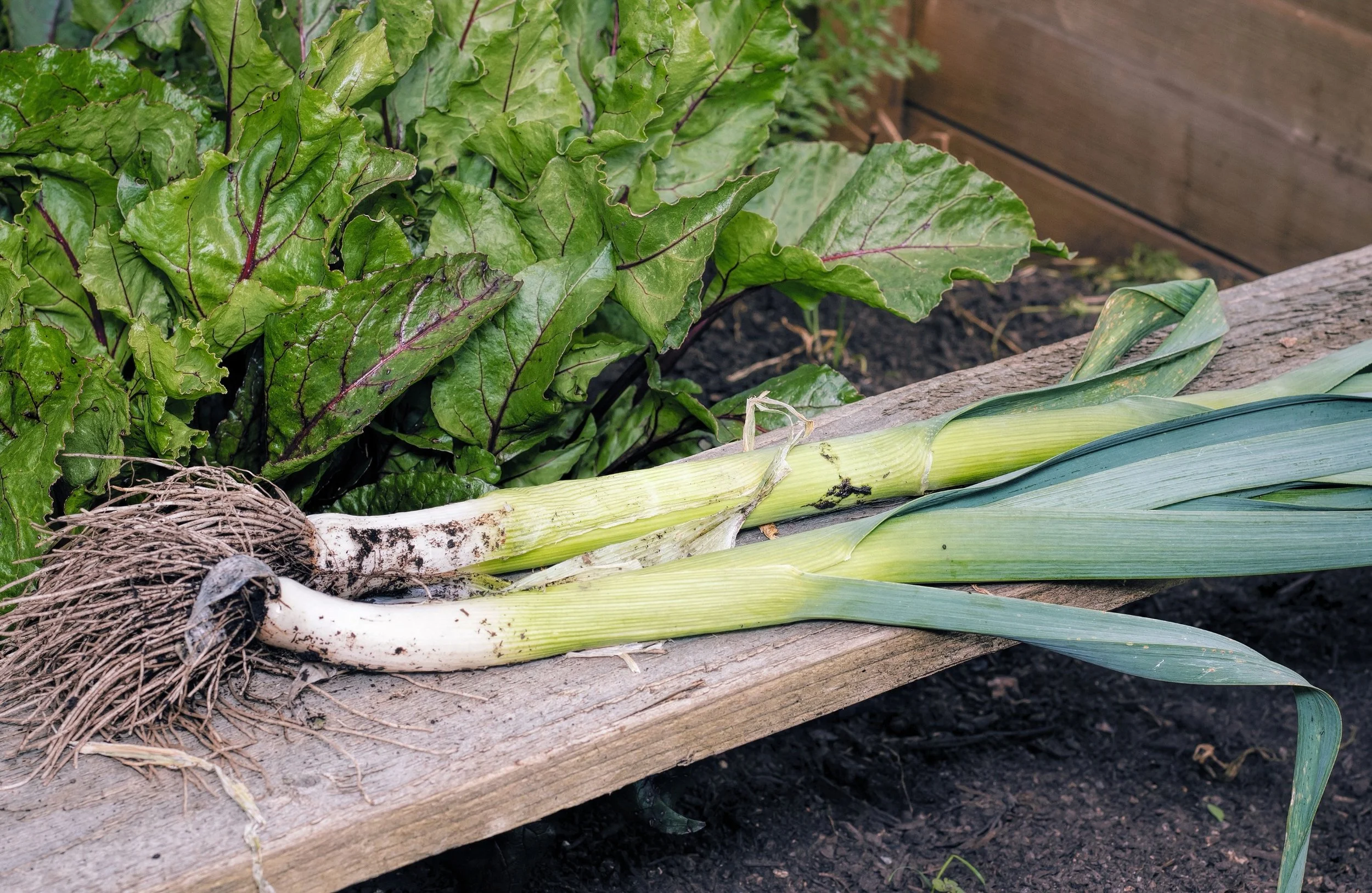
Quick answer: Leeks can be harvested at any size, but most people start lifting them in late summer or autumn and carry on through winter. Early varieties are ready from late summer, mid-season types through winter, and late types into spring. There's no need to lift them all at once: hardy leeks stand happily in the ground until you need them. Ease each one out with a fork rather than pulling.
Most vegetables have a short window when they're at their best. Leeks are different. Once they reach a usable size, they can wait in the ground for weeks or even months, getting a little bigger as they go. That makes them one of the most useful crops for fresh winter harvests.
Leek harvest times by type
When your leeks are ready depends mostly on the variety you grew:
Early varieties: late summer into autumn. 'Stamford' is a quick-bulking early leek.
Mid-season varieties: through the winter months. 'Krypton' is ready from December, and 'Oarsman' is bred for winter harvests.
Late varieties: winter into the following spring. 'Bandit' stands well into spring.
Long-season varieties: 'Porbella' crops over a long stretch, so you can lift it over many months.
Baby leeks: around two months after sowing, whatever the variety.
Full-size leeks take about six months from sowing. Spring-sown leeks are usually ready from late summer or autumn onwards. If you're not sure when yours went in, see when to plant leeks in the UK
How to tell leeks are ready
There's no single moment when a leek is ripe. You're simply choosing a size you're happy with:
Thumb-thick or less: baby leeks, sweet and tender, good for eating whole.
Medium stems: the most versatile size, and a good point to start lifting.
Full-size stems: the biggest leeks, ideal for soups and winter cooking.
A long white base is a good sign the plants were planted deep and earthed up well. If yours are staying thin into autumn, why leeks don't grow covers the usual causes.
Spread the harvest over months
The best way to get the most from a row of leeks is to lift a few at a time:
Start small. Begin lifting while the leeks are still slim, from late summer, rather than waiting for them all to reach full size.
Take every other leek. Lifting alternate plants along a row gives the ones left behind more room to thicken.
Leave the hardy ones. Winter and late varieties can stay put through frost and snow. A frost can even make them taste sweeter.
Treat the row like a store cupboard: take what you need for the week and leave the rest standing.
How to lift leeks without snapping them
Leeks have deep roots and a long buried stem, so pulling them by the leaves usually snaps them. Instead:
Push a garden fork into the soil a little way from the leek, to avoid spearing the stem.
Lever the fork back gently to loosen the roots.
Lift the leek out by its base, not the leaves.
Shake off the soil and trim the roots and the tough tips of the leaves outside, so less soil comes into the kitchen.
Soil often gets trapped between the leaves of earthed-up leeks, so slice them lengthways and rinse well before cooking.
Harvesting leeks in containers
Leeks in pots are lifted the same way, just more gently. Loosen the compost around each leek with a hand fork, then ease it out by the base. Pots freeze through more easily than open ground, so it's worth lifting container leeks before a long cold spell. For more on growing them this way, see growing leeks in containers
Harvesting in frost and cold weather
Hardy leeks aren't harmed by frost, but frozen ground can make them hard to dig. If a long freeze is forecast, lift a few leeks beforehand so you have some to hand in the fridge. Once the ground thaws, you can go back to lifting as needed.
Leeks left too long in spring
Late leeks can stand well into spring, but as the weather warms up, some will start to send up a stiff flower stalk (this is called bolting). Once that happens, the centre of the leek turns tough. Lift any bolting leeks and use them first. Aim to finish the row before the rest follow.
After the harvest
Once the row is clear, add the leaves and trimmings to the compost heap, unless they show signs of rust or disease. Plan to grow leeks and other onion family crops in a different part of the plot next year, to stop soil problems building up.
For the whole growing season, see how to grow leeks in the UK. For other crops to lift through the colder months, see when to harvest parsnips and vegetables that grow all year round
Common questions
How do you know when leeks are ready to harvest?
Leeks are ready whenever they reach a size you want to eat. Baby leeks can be lifted after about two months, and full-size leeks take around six months from sowing.
Should you pull or dig up leeks?
Dig them. Loosen the soil with a fork first, then lift each leek by its base. Pulling by the leaves usually snaps the stem and leaves the white part in the ground.
Can you harvest leeks in frost?
Yes. Frost doesn't harm hardy leeks and can make them taste sweeter. The only problem is frozen ground, so lift a few before a long freeze is forecast.
What happens if you leave leeks in the ground too long?
In spring, leeks left standing start to bolt and send up a flower stalk, which makes the centre tough. Lift and use any bolting leeks straight away.
Harvest times, varieties and lifting method based on RHS guidance.