When to Harvest Parsnips
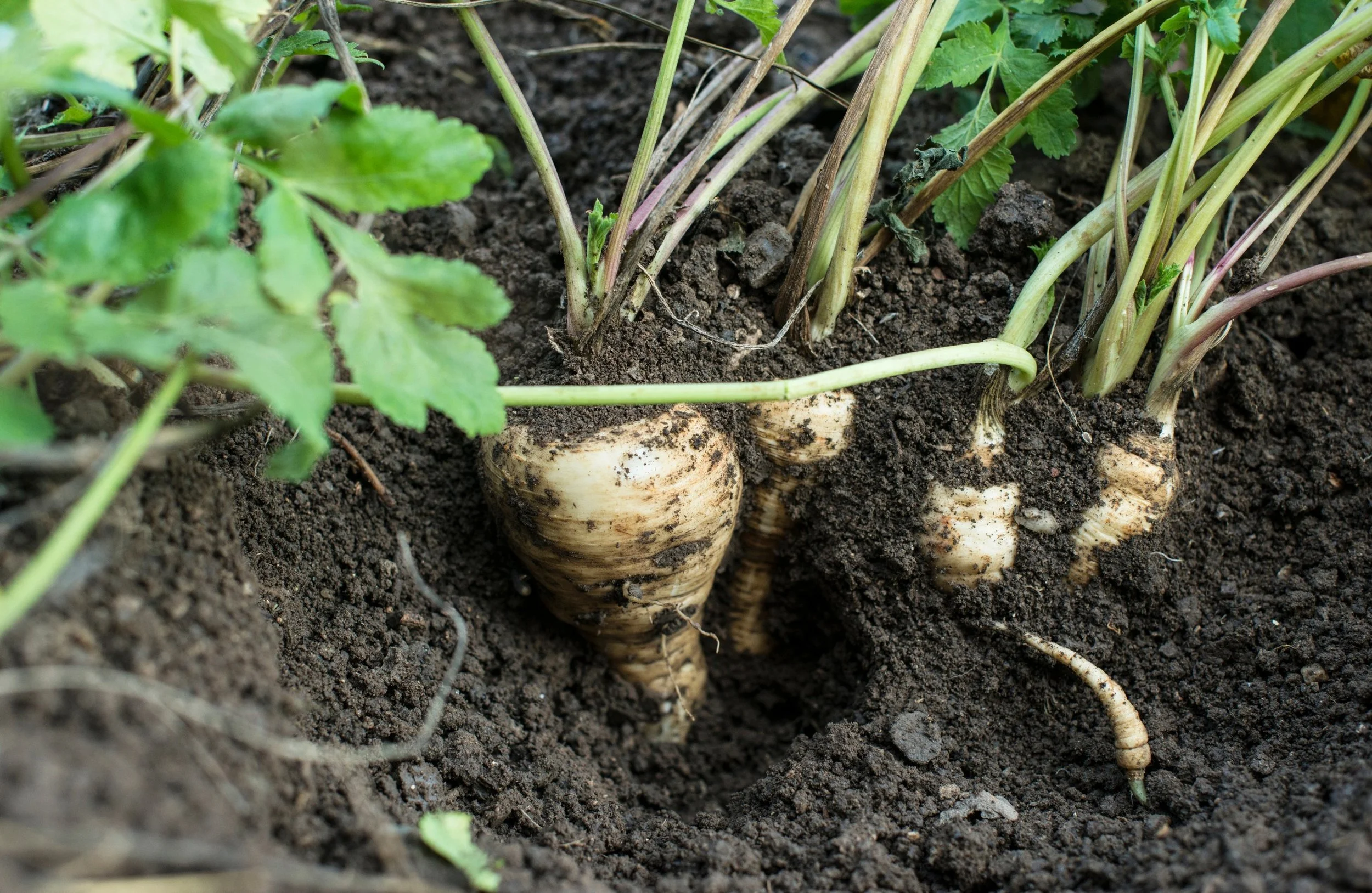
Parsnips are the gardener's reward for patience. They sit in the ground all summer, quietly fattening up, and they're at their best in the depths of autumn and winter, just when fresh homegrown veg is scarce. The good news is there's no rush: you can dig them a few at a time, whenever you need them.
Quick answer
Parsnips are usually ready from October, once the leaves start to yellow and die back. For the sweetest flavour, hold off until the first proper frost has been and gone. The roots can stay in the ground through winter and be dug as needed, but aim to finish the crop by early spring, before the plants start growing again.
How to tell parsnips are ready
The leaves are the easiest clue. When the tall, feathery tops start to turn yellow and flop, usually from October onwards, the roots underneath are fully grown.
If you're not sure, scrape a little soil away from the top of one root. A mature parsnip is broad at the shoulder, often several centimetres across.
Parsnips planted in spring have been growing for at least six months by this point, which is why they're one of the slowest crops in the veg patch.
Why frost makes parsnips sweeter
Parsnips are one of the few vegetables that genuinely improve with cold weather. As the temperature drops, the plant turns some of the starch stored in its roots into sugar, which acts like a natural antifreeze. For us, that means a noticeably sweeter, nuttier flavour.
You can dig them before a frost, and they'll be perfectly good to eat. But if you can hold out until a hard frost has been, usually in November in most of the UK, you'll taste the difference.
How to harvest parsnips without snapping them
Parsnip roots are long and snap easily, so pulling on the leaves usually leaves the best part behind in the soil. Instead:
Push a garden fork into the ground a little way from the row, so you don't spear the roots.
Lever the fork back gently to loosen the soil all around the root.
Once the soil is loose, ease the parsnip out, holding it at the top rather than tugging the leaves.
Shake off loose soil, and use any damaged or snapped roots first, as they won't keep.
Wear gloves when handling the leaves. The sap can irritate skin, especially in bright sunshine.
Leaving parsnips in the ground over winter
Honestly, the easiest place to keep parsnips is right where they grew. The cold soil keeps them in good condition for months, so just dig a few whenever you're cooking with them.
There are two things to plan for.
Mark the row. Once the leaves die back completely, the roots are surprisingly easy to lose. Push a cane in at each end of the row before that happens.
Stop the ground freezing solid. A hard freeze can make parsnips impossible to dig. Spread a thick layer of straw over the row, weighed down with netting or fleece, so you can still get a fork in during cold spells. Alternatively, lift a batch before a cold snap and keep them somewhere cool.
Plan to finish the crop by the end of winter. From around February, parsnips start to put on fresh growth, using up the goodness stored in the root, which becomes woody and less pleasant to eat.
Storing parsnips out of the ground
If you need the space or the ground is too wet to dig, you can lift the whole crop and store it. Trim the leaves off, then pack the unwashed roots into a box of barely damp sand or compost, so they aren't touching. Kept somewhere cool and frost-free, like a garage or shed, they'll last for several months.
Parsnips also freeze well. Peel, chop and blanch them briefly in boiling water, then cool and freeze.
Harvesting parsnips grown in containers
Parsnips grown in deep containers are harvested the same way, just more easily. Tip the pot out onto a sheet, or loosen the compost with a trowel, and lift the roots out whole. Because compost in pots gets colder than the ground, it's best to harvest container parsnips earlier in winter rather than leaving them into late winter.
For container advice, see growing parsnips in containers
Parsnip harvest season in the UK
Parsnips sown in spring are normally ready from October onwards, and you can keep lifting them right through winter. Most gardeners find the flavour peaks from November to January, after a few frosts.
For planting advice, see when to plant parsnips in the UK
For full growing advice, see how to grow parsnips in the UK
If your crop disappointed, see why parsnips don't grow
Common questions
Can I leave parsnips in the ground all winter?
Yes. Parsnips are very hardy and keep best in the soil. Just lift them as you need them, and try to finish the crop by early spring, before they start regrowing.
Do parsnips need frost?
No, but it helps. You can harvest them any time once they're mature, but a hard frost turns some of their starch into sugar and makes them noticeably sweeter.
How do I dig parsnips when the ground is frozen?
Cover the row with a deep layer of straw and pin it down with a net or fleece, and the soil underneath won't freeze solid. If you forget, wait for a thaw, or lift a batch in advance of a cold spell and store them in a box of damp sand.
Why are my parsnips woody?
Usually because they were left in too long. From late winter, parsnips start growing again and draw on the energy in the root, which makes it tough and woody. Aim to finish harvesting by February or early March.
Harvest timings based on RHS guidance.