How to Grow Carrots in the UK
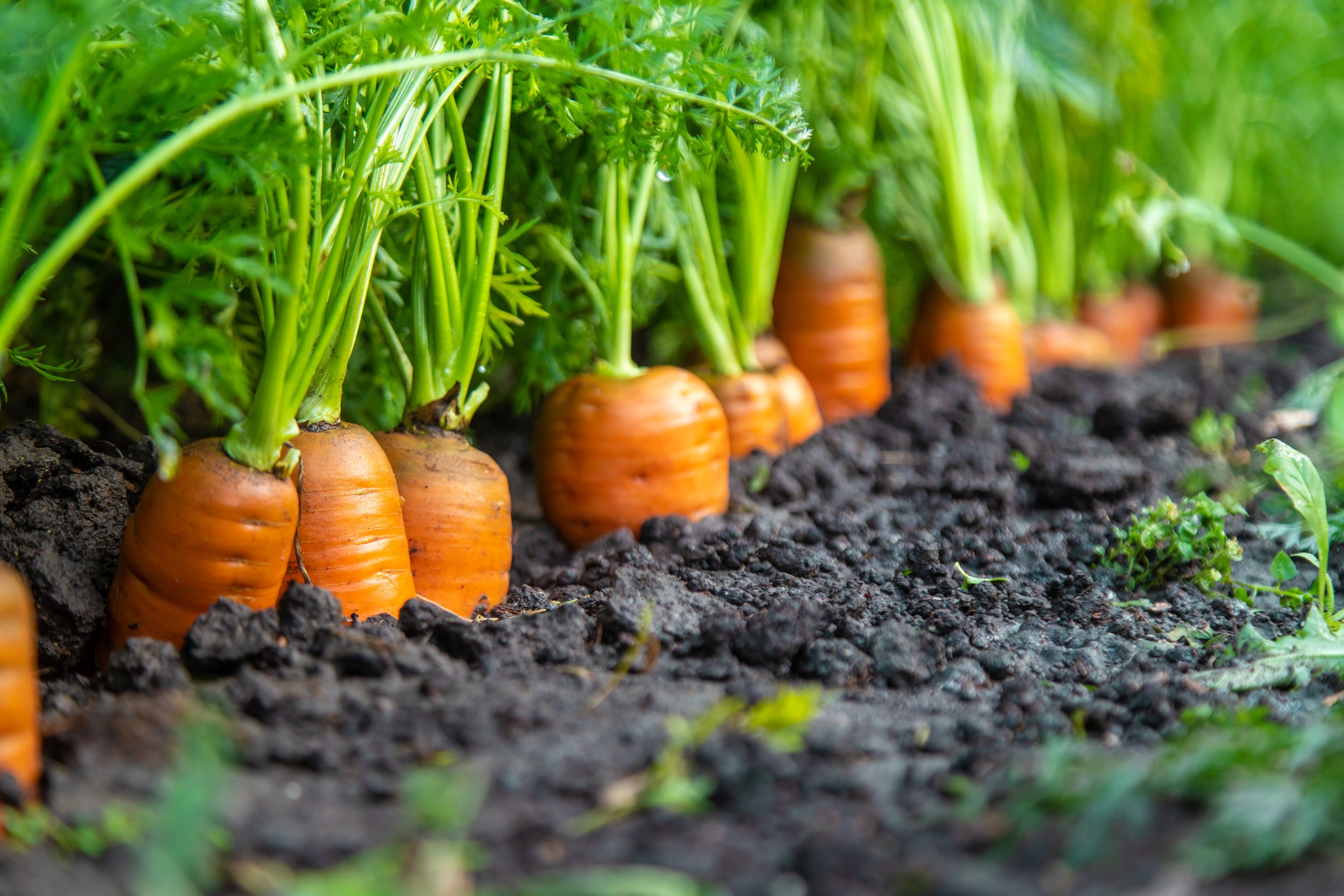
Carrots are one of the most satisfying vegetables to grow. They're sown straight into the ground, need very little care once they're up, and a freshly pulled home-grown carrot has a sweetness you rarely find in the shops. The secret to good carrots is almost entirely in the soil: give them loose, stone-free ground and they'll do the rest.
Quick facts
Sow outdoors: April to early July, or from February and March under cloches or fleece for early crops
Depth: about 1 cm
Spacing: thin to 5–7.5 cm apart, in rows 15–30 cm apart
Soil: light, deep and stone-free
Position: full sun
Ready: about 12–16 weeks after sowing
Choosing carrot varieties
Early varieties grow quickly and are sown first, from late winter under cover.
Maincrop varieties are sown from spring into early summer and give bigger roots that store well.
Short or round varieties are ideal for heavy clay, stony soil and containers, as they don't need deep, perfect soil.
Carrot fly-resistant varieties, such as 'Flyaway', help if carrot fly is a problem in your area.
When to sow carrots
February to March: sow early varieties under cloches or fleece.
April to early July: sow outdoors without cover.
Rather than sowing everything at once, the RHS suggests sowing a new row every three to four weeks for a steady supply. In cold ground, the seed can sit for weeks without sprouting, so in a chilly spring, wait for the soil to warm up.
Month-by-month advice is in when to plant carrots in the UK
Preparing the soil
This is the most important step. Carrots push a long root straight down, and anything in the way (stones, lumps of clay or compacted soil) makes them fork, twist or stop short.
Fork over the bed deeply, picking out stones as you go.
Break up any hard lumps so the soil is fine and crumbly.
Don't add fresh manure or compost just before sowing, as it encourages forked roots. A bed that was improved for a previous crop is ideal.
On heavy or stony soil, grow short or round varieties, or use raised beds or deep containers.
See best soil for vegetable gardening in the UK and why carrots grow forked
How to sow carrots
Rake the soil level and fine.
Make a shallow drill about 1 cm deep, with rows 15–30 cm apart.
Carrot seed is tiny, so mix it with a pinch of dry sand and sprinkle it along the drill as thinly as you can.
Cover lightly with soil and water gently.
Keep the soil moist while you wait for the seedlings. Carrots can take two to three weeks to come up.
Carrots don't transplant well, so always sow them where they're going to grow.
Thinning
Once the seedlings are big enough to handle, thin them to about 5–7.5 cm apart. Crowded carrots stay small and can become tangled together.
Thin on a still evening if you can, and water afterwards. The smell of bruised carrot leaves attracts carrot fly, so remove the thinnings rather than leaving them on the bed.
Watering
Carrots are more drought-tolerant than many crops. In dry spells, give them a thorough soak about every two weeks rather than little and often. The most important thing is to keep watering steady, as dry soil followed by a sudden drenching causes roots to split.
Carrots in containers dry out much faster and need regular watering. See how often to water carrots
Protecting from carrot fly
Carrot fly is the main pest. Its larvae tunnel into the roots, leaving rusty brown channels. The most effective protection is fine insect-proof mesh, laid over hoops from sowing and kept on. It also helps to:
thin in the evening and remove the thinnings
wait until late May to sow, by which time the first wave of flies has passed
grow resistant varieties such as 'Flyaway'
Harvesting and storing
Carrots are usually ready about 12–16 weeks after sowing, depending on the variety. Pull them when they're big enough to use, as young carrots have the best flavour and very large ones can become woody. If the ground is firm, loosen the soil with a fork first to avoid snapping them.
Maincrop carrots can be stored in boxes of damp sand or compost somewhere cool, or left in the ground into winter under a layer of straw or cardboard.
Growing carrots in containers
Containers are a great way to grow straight carrots, especially if your soil is heavy or stony. Use a deep pot filled with multi-purpose compost, and choose short or round varieties for smaller pots. Raising containers off the ground also helps keep carrot fly away. See growing carrots in containers
Common problems
Seeds not coming up: usually cold or dry soil. See why carrot seeds don't germinate
Forked or twisted roots: caused by stones, compacted soil, fresh manure or crowding.
Split roots: caused by uneven watering.
Small carrots: usually from not thinning, or from harvesting too early.
Tunnels in the roots: carrot fly.
Green tops: the shoulders have been exposed to light. Draw a little soil over them as they grow.
Common questions
When should I sow carrots in the UK?
Outdoors from April to early July, sowing a short row every few weeks. Early varieties can be sown from February or March under cloches or fleece.
How long do carrots take to grow?
About 12–16 weeks from sowing, depending on the variety. Early varieties are the quickest.
Why are my carrots forked?
Forking is usually caused by stones or compacted soil, fresh manure added just before sowing, or seedlings that weren't thinned.
How do I stop carrot fly?
Cover carrots with fine insect-proof mesh from sowing, thin in the evening, remove the thinnings and try resistant varieties such as 'Flyaway'.
Timings, thinning and carrot fly advice based on RHS guidance.