How to Grow Onions in the UK
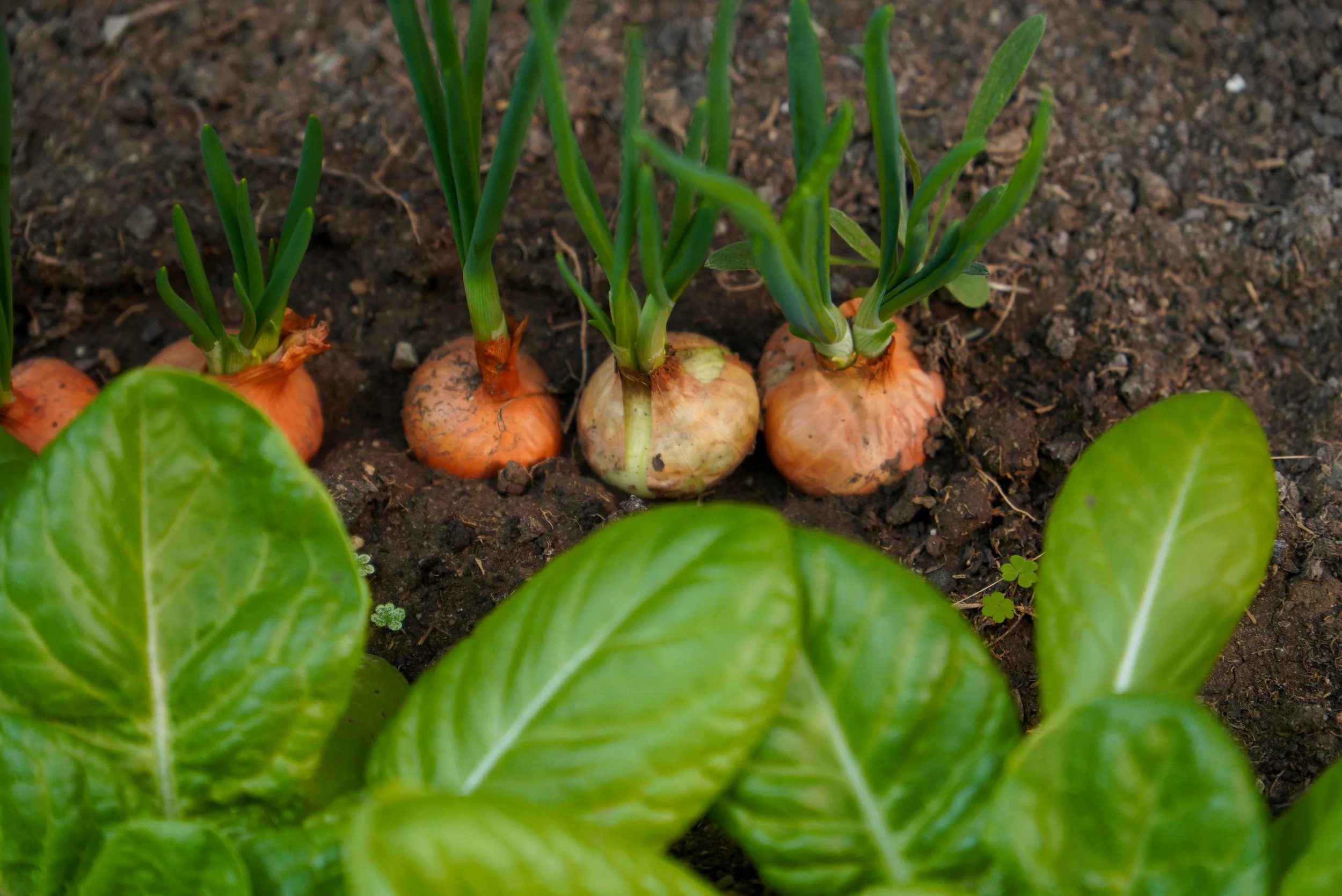
Onions are one of the most beginner-friendly crops you can grow in the UK. They're happy in garden beds, raised beds or big pots, they don't ask for much space, and a good harvest will keep your kitchen supplied for months.
Give them sun, soil that drains freely and a regular weed, and they'll do most of the work themselves.
Quick facts
Plant sets: early to mid-spring, or autumn for overwintering varieties
Depth: 2 cm, with the tip just showing
Spacing: 10–15 cm apart, in rows 20–30 cm apart
Position: full sun, free-draining soil
Harvest: June to July (autumn-planted), July to October (spring-planted)
Containers: at least 45 cm wide and deep
Choosing onion sets or seeds
There are two ways to start onions, and for most beginners the answer is sets. These are baby onion bulbs that simply get pushed into the soil, and they're the quickest, most foolproof route to a crop.
The one drawback is that sets are more inclined to bolt, meaning they send up a flower stalk instead of fattening the bulb. Look for heat-treated sets, which have been warmed to stop this happening and are far less likely to flower.
Seed is the budget option, and it opens up a much bigger choice of varieties. It does need more patience and looking after, and old seed is a gamble, as it loses its ability to sprout within a year or two. Buy fresh each season.
Varieties worth trying: 'Sturon', 'Centurion', 'Red Baron', 'Hercules' and 'Rumba' have all earned the RHS Award of Garden Merit. If bolting worries you, 'Hercules' is a good choice, and 'Red Baron' is the one to pick for a punchy red onion.
When to plant onions
Spring sets: go in during early to mid-spring and are ready to lift between July and September.
Overwintering (Japanese) sets: go in during autumn and give you the first onions of the year in June and July. They're bred to shrug off winter cold, which would make ordinary onions run to flower.
Seed: start indoors between mid-winter and early spring, or sow outside in early to mid-spring once the ground has warmed.
On heavy clay that stays soggy all winter, autumn sets will probably rot in the ground. Start them in module trays in an unheated greenhouse instead, one set per cell, and move them into the bed in spring.
For more on timing, see when to plant onions in the UK.
Planting onion sets
Make a shallow drill about 2 cm deep, or simply press each set into soft soil until only its papery tip pokes above the surface.
Leave 10–15 cm between sets, and 20–30 cm between rows. Give them the wider spacing if you want larger onions.
Press the soil down around each one and give the row a good drink.
Lay fleece or netting over the row straight away. Birds see the dry tips as nesting material or grubs and will happily pluck new sets out until they've rooted.
Soil and position
Onions grow best in:
a sunny spot
free-draining soil
weed-free ground improved with compost
Onion roots are short and don't spread far, so the plants rely on what's right beneath them. A bucket of garden compost or well-rotted manure for each square metre, dug in before planting, gives them the food and moisture they need. Skip fresh manure, which is too strong.
You can read more in best soil for vegetable gardening in the UK.
Watering onions
Onions only need watering when the weather stays dry for a while, and it matters most early in the season while the roots are getting going. Once the bulbs have fattened up in mid-summer, put the watering can away. Extra water late on makes spring-planted onions keep less well. Aim at the soil, not the leaves, as damp foliage invites fungal problems.
For more, see how often to water onions.
Looking after onions
Weed little and often. Onion leaves are thin and upright, so they do nothing to shade out weeds, and any weeds that get established will steal food and water and leave you with smaller bulbs. Use your fingers close to the onions, as a hoe blade can easily nick the bulbs.
Feed only if your soil is poor. Good compost at planting time is normally all onions need. On thin soil, a nitrogen-rich organic feed for autumn-planted onions in late winter helps them grow on and makes them less likely to flower early.
Pinch out any flower stalks the moment you see them. Once a plant starts flowering, it pulls energy out of the bulb, and the onion won't keep for long afterwards.
Growing onions in containers
A large pot is a great option if your ground is wet or you're short on space. Choose one that's at least 45 cm across and 45 cm deep, fill it with soil-based compost, plant the sets exactly as you would outdoors, and stand it in a sunny spot.
For container advice, see growing onions in containers.
Harvesting onions
Onions planted in autumn are ready in June and July. Spring sets and seed-sown onions follow on from July through to October.
The signal to watch for is the leaves turning yellow and flopping over by themselves, which means the bulbs are almost fully grown. Lift them before the leaves have completely withered. Ease them out gently with a fork, because a bruised onion is likely to rot once it's stored. Cook with any damaged ones first.
For more, see when to harvest onions.
Drying and storing onions
Before storing, onions need about a fortnight to dry out. Spread them in the sun on something airy, like an old oven rack, so the air reaches underneath. If the weather turns wet, move them into a greenhouse or a shed with good airflow.
When the outer skins and leaves feel papery, they're ready to store. Net bags, a single layer in a slatted tray or a traditional plait all work well.
Pick a spot that's cool, dry and airy, and has some light. It sounds odd, but a dark cupboard actually encourages onions to start sprouting.
Autumn-planted onions keep until early winter, while spring-planted and seed-grown onions will often last until the following spring.
Common problems
Onions flowering (bolting): a cold snap in spring is usually to blame. Pinch out the flower stalk and use those onions first, as they won't keep.
Sets pulled out of the ground: almost always birds. Fleece or netting until the sets have rooted solves it.
Small bulbs: usually weeds competing for food and water, or soil that wasn't improved before planting.
Onions rotting in storage: normally caused by bruising at harvest time or storing them before they were fully dry.
Common questions
Should I bend over onion tops before harvesting?
No, you can skip this. It was standard advice for years, but it's now thought to be unnecessary. Leave the leaves to yellow and fall over on their own, which tells you the onions are nearly ready, and lift them before the foliage has completely died away.
Why are my onions flowering?
That's known as bolting, and a cold spell in spring is the usual trigger. Onions grown from sets are more likely to do it than those grown from seed, so choosing heat-treated sets makes a big difference. Pinch out any flower stalks as soon as they appear.
Can I plant onion sets in autumn?
Yes, as long as you buy overwintering (Japanese) varieties, which are bred to cope with the cold. Planted in autumn, they're ready to harvest in June and July. On heavy soil that gets waterlogged in winter, start them in modules under cover instead, or they may rot.
Should onions be stored in the dark?
No. Onions keep best somewhere cool, dry, airy and light. Darkness actually encourages them to sprout.
Planting times, spacing and varieties based on RHS guidance.