How to Grow Broad Beans in the UK
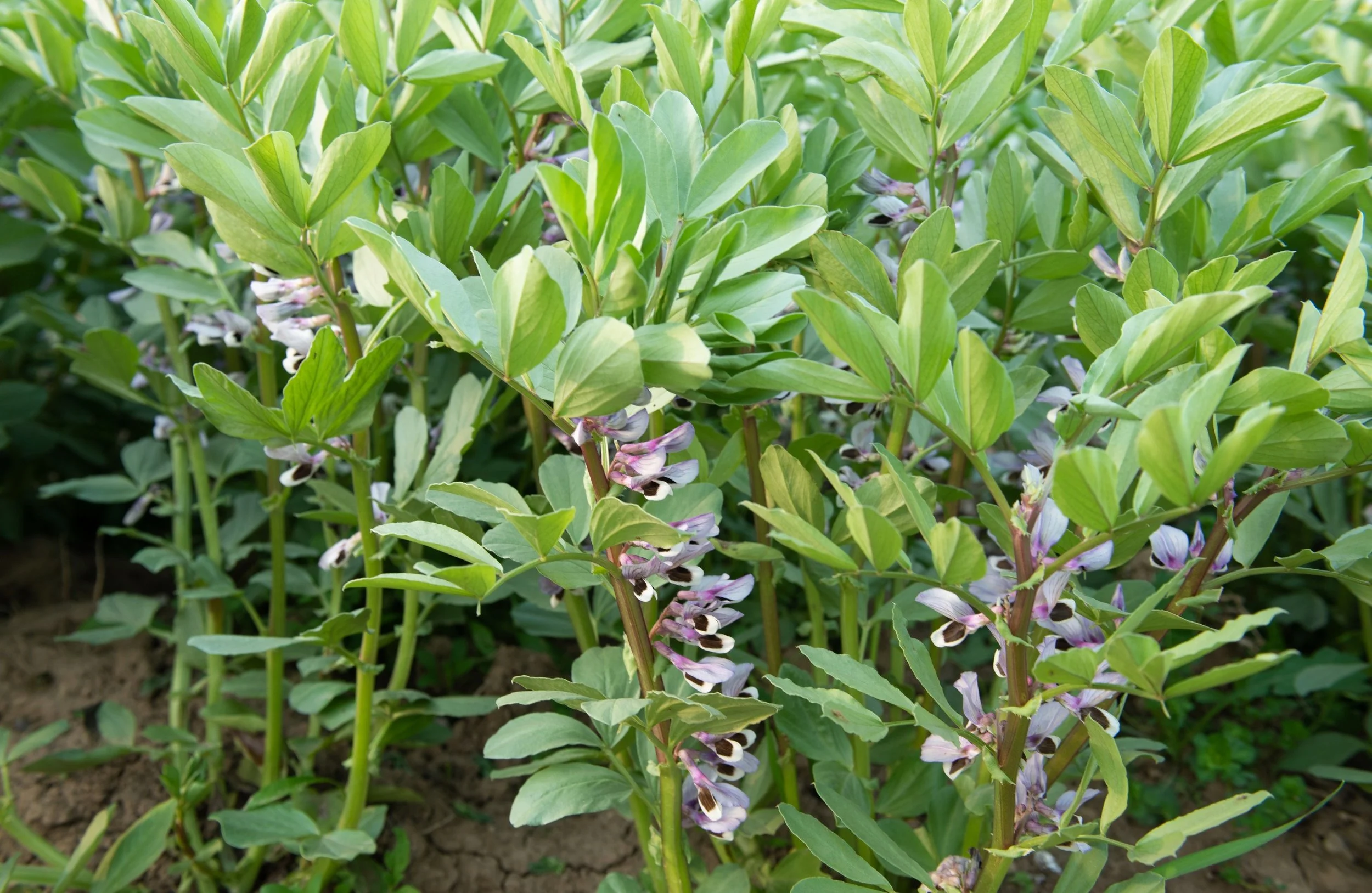
Broad beans are one of the toughest, most rewarding crops you can grow in the UK. They shrug off cold weather, they're ready before almost anything else in the veg patch, and a fresh plate of homegrown beans in late spring is hard to beat.
They're simple from start to finish: big seeds that are easy to handle, sturdy plants and very little fuss. Beds, raised beds and large pots all work.
Quick facts
Sow: October to November (hardy varieties, mild areas) or February to early May
Depth: 5–7.5 cm
Spacing: 15–23 cm apart, in single rows 45 cm apart or double rows 23 cm apart
Position: sunny and sheltered, in well-drained soil
Harvest: from late spring through summer, depending on when you sow
Containers: at least 40 cm across, with a dwarf variety
Choose the right variety
Not all broad beans are the same, and picking the right one for when you're sowing makes a big difference.
For autumn and winter sowing: 'Aquadulce Claudia' is the classic choice, bred to cope with cold weather.
For spring sowing: 'Witkiem Manita' grows fast and crops early.
For pots and windy gardens: 'The Sutton' is a compact dwarf variety that stays around knee height.
For something traditional: 'Dreadnought' is an old favourite with long, slim pods.
All four hold the RHS Award of Garden Merit.
When to sow broad beans
You have two chances each year.
Autumn sowing (October to November): gives the earliest crop of all, sometimes as soon as May. It's best suited to gardens with gentle winters, or a warm, tucked-away plot where the soil drains quickly, and you'll need a hardy variety. Cover young plants with fleece or a cloche in a cold snap.
Late winter and spring sowing (February to early May): the reliable option for everyone else. Sow a few rows a couple of weeks apart and you'll keep picking right through summer.
If your soil is cold and wet, or mice are a problem, start the seeds off indoors in pots from February and plant them out in spring instead.
For more on timing, see when to plant broad beans in the UK.
Sowing broad bean seeds
Push each bean into the soil 5–7.5 cm deep, with the dark scar on the seed facing down.
Leave 15–23 cm between seeds. Bigger varieties need the wider spacing.
Space single rows 45 cm apart. Double rows work well too: two rows 23 cm apart, then a 60 cm path before the next pair.
Tuck a few spare seeds in at the end of each row. If any fail to come up, you can move a spare seedling into the gap.
Starting indoors? Sow one bean per small pot or module, 5 cm deep, and keep them somewhere bright. Get them used to outdoor conditions for a week or so before planting out in early to mid-spring.
Soil and position
Broad beans do best in a sunny, sheltered spot with soil that drains well, as seeds can rot in cold, waterlogged ground. A few weeks before sowing, clear the weeds and dig in a couple of buckets of garden compost or well-rotted manure per square metre. This helps the soil hold on to moisture once the plants are growing.
You can read more in best soil for vegetable gardening in the UK.
Watering broad beans
Broad beans in the ground rarely need much watering, unless your soil is light and sandy. The time that really counts is flowering: give them a good soak as the first flowers open, then another a fortnight later, and you'll get noticeably more pods.
Plants in pots are a different story, as the compost dries out quickly, so check them often.
For more, see how often to water broad beans.
Looking after broad beans
Stake taller varieties. Tall broad beans topple easily in wind or heavy rain. Knock in a stake at each corner of the row, plus extra ones along the sides, and run a loop of string around them, adding a new loop every 30 cm or so as the plants grow. Dwarf types planted in double rows usually hold each other up.
Pinch out the tops. Once the first pods have formed at the bottom of the plant, nip off the top few centimetres of each stem. The plant then focuses on filling its pods, and you remove the soft growth that blackfly love. The tips are tasty lightly steamed.
Keep weeds down, especially while the plants are small, and a layer of compost around the stems helps keep the soil moist.
Growing broad beans in containers
Dwarf varieties are perfect for a large pot on the patio. Use a container at least 40 cm wide, filled with multi-purpose or soil-based compost, and space the seeds about 15 cm apart and 5 cm deep. Stand it somewhere sunny and sheltered. Once flowers appear, a fortnightly liquid tomato feed helps keep the plants productive.
For container advice, see growing broad beans in containers.
Harvesting broad beans
Depending on when you sowed, you'll be picking from late spring through to late summer. Start at the bottom of the plant, where the pods ripen first, and check every few days.
Pick while the pods are plump but not huge. The younger the bean, the sweeter and more tender it tastes. A quick test: split a pod and look at the scar where each bean joins it. If it's pale green or white, they're perfect. If it's turned black, the beans will be tough.
Very young pods, a few centimetres long, can be cooked and eaten whole.
Snip pods off with scissors rather than pulling, so you don't damage the plant. The more you pick, the more the plants produce.
When the plants have finished, cut the stems off at ground level but leave the roots in the soil. Like all beans, they hold nitrogen in their roots, which feeds whatever you grow in that spot next.
For more, see when to harvest broad beans.
Common problems
Blackfly: clusters of small black insects on the soft tips in late spring. Pinching out the tops early is the best prevention.
Chocolate spot: brown spots on leaves and stems, most common in damp weather and on crowded plants. Good spacing and airflow help.
Mice: they dig up and eat seeds sown outdoors, especially in autumn and winter. Starting seeds in pots avoids the problem.
Notched leaf edges: small, U-shaped bites from pea and bean weevils. It looks alarming, but established plants usually cope fine.
Slugs and snails: they target young shoots, so keep an eye on seedlings.
Common questions
Can I sow broad beans in autumn?
Yes, if you live in a milder part of the UK or have a sheltered, well-drained garden. Pick a cold-tolerant variety like 'Aquadulce Claudia', and throw fleece over the seedlings when frost is forecast. Elsewhere, wait until late winter or spring.
Should I pinch out the tops of broad beans?
Once the lowest pods have formed, nipping off the top of each stem helps the plant focus on filling its pods and removes the soft growth blackfly love. It isn't essential, but it's well worth doing.
How do I know when broad beans are ready?
Look at the scar where each bean joins the pod. If it's pale green or white, the beans are young and tender. If it's black, they've gone past their best and will be tough.
What do I do with broad bean plants after harvesting?
Cut the stems down at ground level but leave the roots in the soil. Broad bean roots store nitrogen, which is released as they rot down and feeds the next crop.
Sowing times, spacing and varieties based on RHS guidance.