How to Grow Turnips in the UK
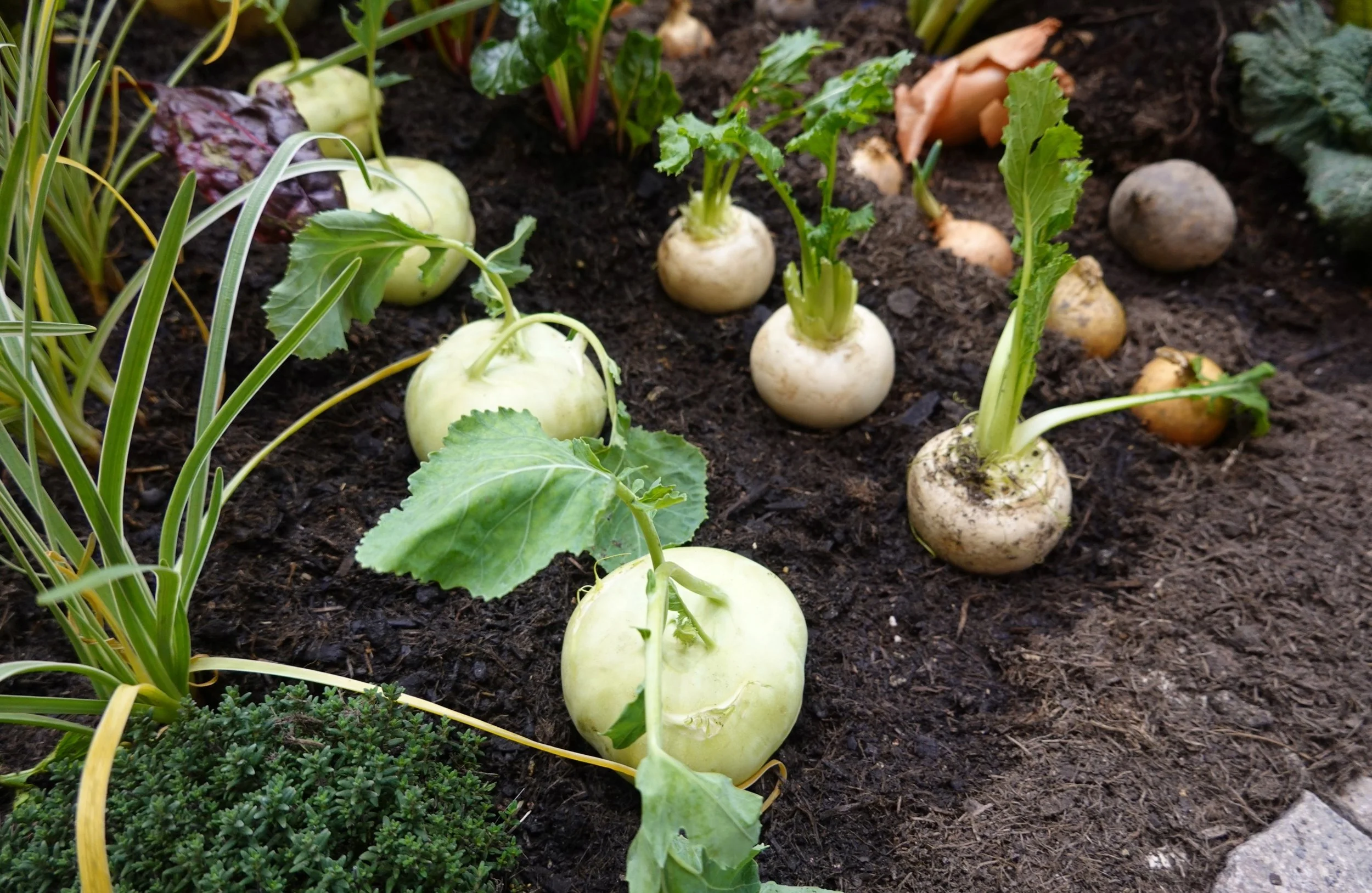
Quick facts
Early turnips: sow March to June, ready in about six weeks
Maincrop turnips: sow July to mid-August, ready in about ten weeks, from October onwards
Sowing: 1 cm deep, rows 23–30 cm apart
Thinning: 15 cm for early turnips, 23 cm for maincrop, 10 cm for baby turnips
Bonus crop: the leaves (turnip tops) are good to eat too
Key moment: keeping the soil moist, as dry soil gives small, woody roots
Turnips are one of the fastest root crops you can grow. Early varieties can go from seed to kitchen in about six weeks, and a late-summer sowing gives roots to lift through autumn and early winter. They're also a member of the cabbage family, which shapes where they go in the garden and which pests to look out for.
Early and maincrop turnips
Early turnips are sown little and often from March to June. They grow fast and are picked small and tender, from May to September.
Maincrop turnips are sown from July to mid-August, often in ground cleared after early potatoes, peas or beans. They grow larger and are lifted from October, and some can be stored.
For sowing times, see when to plant turnips in the UK
Choosing a turnip variety
These varieties hold the RHS Award of Garden Merit:
'Tokyo Cross': a very fast-growing white turnip with crisp roots
'Oasis': a white, flattish turnip with a mild flavour, slow to run to flower
'Temari Red': small scarlet roots with white flesh blushed red
Preparing the ground
Turnips need a sunny spot with rich soil that drains well. Dig in garden compost or well-rotted manure, ideally in the autumn before sowing. Because turnips belong to the cabbage family, grow them with cabbages, kale and broccoli in a crop rotation, so soil problems such as clubroot don't build up.
For more detail, see best soil for vegetable gardening in the UK
Sowing turnip seeds
Turnips are sown straight into the ground where they'll grow.
Make a drill about 1 cm deep and water along the bottom if the soil is dry.
Sow the seed thinly along the drill.
Cover with soil, leaving 23–30 cm between rows.
For a steady supply of early turnips, sow a short row every two or three weeks rather than one long row at once.
Thinning turnip seedlings
Thin the seedlings once they're big enough to handle, in stages if you like, and eat the thinnings as leafy greens:
Early turnips: 15 cm apart
Maincrop turnips: 23 cm apart
Baby turnips: 10 cm apart
Turnips left crowded compete for water and stay small.
Watering turnips
Steady moisture is the key to good turnips. In dry soil, roots stay small and turn woody, often split, and the plants are more likely to bolt. Water every week or so in dry spells, especially while early turnips are growing fast in late spring and summer.
For more detail, see how often to water turnips
Harvesting turnip tops
The leaves are a crop in their own right. Pick young leaves for salads, where they have a peppery flavour, or cook larger ones up to about 15 cm long like spinach. Take a few leaves at a time and the plants will keep producing more.
Growing turnips in containers
Turnips grow well in a pot at least 40 cm wide, filled with multi-purpose compost. Grow them as baby turnips, thinned to 10 cm apart, and water regularly, as pots dry out quickly.
For more detail, see growing turnips in containers
Harvesting turnips
Pull early turnips young, at about 4–5 cm across for eating raw, or up to about 7 cm for cooking. Maincrop turnips are lifted from October and can be stored for several weeks in trays of damp sand or coir somewhere cool and frost-free.
For more detail, see when to harvest turnips
Common turnip problems
Flea beetles: tiny round holes in young leaves, worst in dry weather. Keeping seedlings well watered and covered with fine mesh helps.
Cabbage root fly: maggots tunnel into the roots. Cover crops with insect-proof mesh from sowing.
Clubroot: swollen, distorted roots and wilting plants. Rotate crops.
Bolting: plants run to flower before the root swells, usually in dry soil or after a sudden change in temperature. For more detail, see why plants bolt.
Powdery mildew: a white coating on the leaves, most common in dry late summers.
If your turnips aren't forming roots, see why turnips don't grow
Common questions
How long do turnips take to grow?
Early turnips are ready in about six weeks from sowing. Maincrop turnips take about ten weeks.
When should you sow turnips in the UK?
Sow early turnips from March to June, and maincrop turnips from July to mid-August for harvests from October.
Can you eat turnip leaves?
Yes. Young leaves are good raw in salads, and larger leaves up to about 15 cm long can be cooked like spinach.
Why are my turnips woody?
Usually dry soil, or roots left in the ground too long. Water every week or so in dry spells and pull early turnips while they're small.
Timings, spacing, varieties, pests and care based on RHS guidance.