How to Grow Broccoli in the UK
Quick facts
Two types: calabrese (one big green head) and sprouting broccoli (lots of small purple or white spears)
Sow calabrese: March to June, ready July to October
Sow sprouting broccoli: February to July, ready from summer through to March, depending on variety
Spacing: calabrese 30–45 cm apart; sprouting broccoli 60–80 cm apart
Time to harvest: three to four months for calabrese; four to ten months for sprouting broccoli
Key moment: planting out before the weather warms up, without disturbing the roots
Broccoli is a rewarding crop for a UK garden, and the right mix of types can give you fresh pickings for much of the year. The first thing to know is that "broccoli" covers two different vegetables, and they're grown in slightly different ways.
Calabrese or sprouting broccoli?
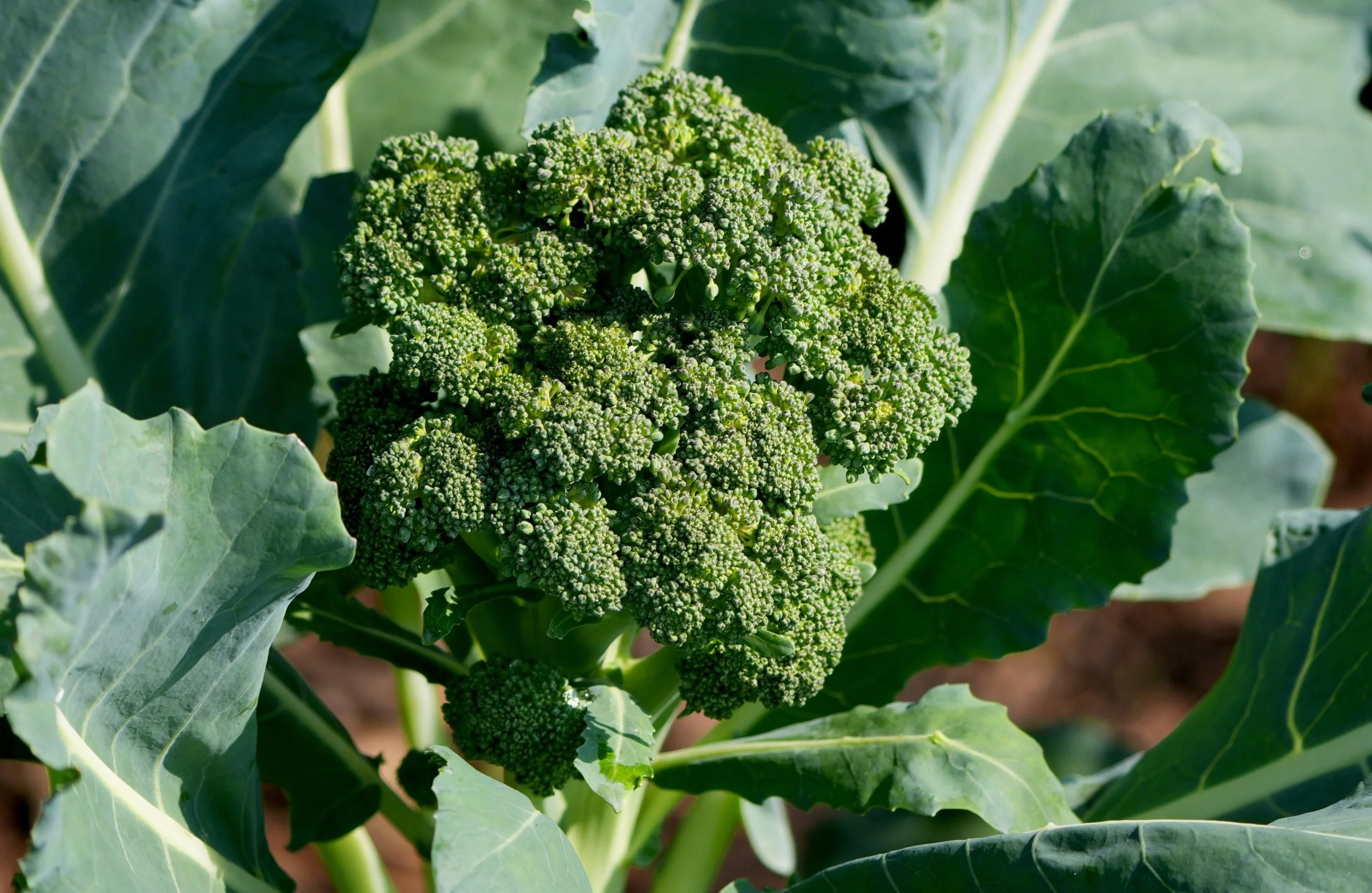
Calabrese is the broccoli you buy in the supermarket: one large, dense green head on a plant up to about 60 cm tall. It's quick, ready three or four months after sowing, and crops from July to October. After the main head is cut, smaller side heads follow for several weeks.
Sprouting broccoli makes a much bigger plant, often 60–90 cm tall, which produces dozens of small spears rather than one head. Traditional varieties are sown in spring and crop in late winter and early spring, when there's little else on the plot. Newer varieties crop from summer. Purple types are usually hardier and heavier cropping than white ones.
For sowing times by type, see when to plant broccoli in the UK
Choosing a broccoli variety
These varieties hold the RHS Award of Garden Merit:
Calabrese
'Green Magic': an early variety that keeps producing side heads after the first cut
'Marathon': a dependable summer calabrese with blue-green heads
'Kabuki': compact plants for smaller beds, good for autumn heads
Sprouting broccoli
'Cardinal': very hardy, with a long picking season
'Claret': strong plants and a heavy crop of large spears
'Mendocino': a high-yielding variety with even purple spears
'Red Fire': upright plants for late winter and early spring picking
If you garden somewhere warm, look for varieties described as bolt-resistant.
Preparing the ground
Broccoli likes a sunny or lightly shaded spot, sheltered from strong wind, with rich soil that drains well. Avoid beds that sit wet over winter if you're growing overwintering sprouting broccoli. Grow it with cabbages and other brassicas as part of a crop rotation.
Dig in about two buckets of garden compost or well-rotted manure per square metre, ideally a few months before planting so the soil settles and firms. If you're preparing the bed just before planting, tread it down well and rake the surface level. Broccoli doesn't like acid soil. Calabrese prefers a pH of 6.8 or more, and sprouting broccoli 6 to 7, so test your soil and lime it the winter before if needed.
For more detail, see best soil for vegetable gardening in the UK
Sowing broccoli seeds
Indoors: fill a module tray with seed compost, water it and sow two seeds per module, 2 cm deep. Pinch out the weaker seedling in each cell once they come up. Seeds should germinate within about two weeks without extra heat. Sow calabrese indoors in March and April, and sprouting broccoli from February.
Outdoors: make a drill about 2 cm deep and water along it. Sow calabrese from April to June, and sprouting broccoli from April to July. Then either:
Sow into a seedbed: space seeds about 7.5 cm apart and move the young plants later, or
Sow where they'll grow: sow three seeds at each spot, then keep the strongest. Space the spots 30 cm apart for calabrese (up to 45 cm for large varieties), or 60–80 cm for sprouting broccoli.
Calabrese sown after April is best sown straight into its final spot. Young calabrese moved in warm weather often stalls and runs to flower early.
Planting out broccoli
Plant out when young plants are 10–15 cm tall. Harden off any raised indoors first.
For more detail, see how to harden off seedlings
Water the plants well before you move them.
Lift them with as much soil around the roots as possible, or ease them out of their modules without breaking up the rootball.
Plant them deeper than they were growing, with the bottom leaves just above soil level.
Press the soil down firmly around each stem and water well.
Space calabrese 30 cm apart (45 cm for larger varieties) in rows 45 cm apart. Space sprouting broccoli 60–80 cm apart each way.
Calabrese planted closer than this gives smaller heads. Aim to get calabrese in before hot weather arrives.
Cover the bed with insect-proof mesh on hoops or canes straight away. It keeps off pigeons, caterpillars and cabbage root fly. Young plants are also a target for slugs in damp weather.
Watering, feeding and support
Water young plants regularly until they're well rooted. After that, water in dry spells. A sudden dry patch can make calabrese flower early, so don't let it go short. A mulch of compost helps keep the soil moist.
For more detail, see how often to water broccoli
On poor soil, give a high-nitrogen feed when plants are about 20 cm tall. As calabrese heads start to form, draw soil up around the base of the stem to steady the plant. Sprouting broccoli gets tall and heavy, so push in a strong cane beside each plant and tie the stem to it before autumn winds arrive.
Growing broccoli in containers
Broccoli is happiest in the ground, but compact calabrese varieties such as 'Kabuki' can be grown in large, deep pots. Sprouting broccoli is generally too big for containers.
For more detail, see growing broccoli in containers
Harvesting broccoli
Cut calabrese when the main head is 10–15 cm across and still tightly in bud, then pick the side heads that follow. Pick sprouting broccoli spears while the buds are still closed, taking about 10 cm of stem with each one. With both types, regular picking keeps new shoots coming.
For more detail, see when to harvest broccoli
Common broccoli problems
Flowering early (bolting): heads open into yellow flowers before they reach full size. Hot weather and plants that stalled after transplanting are the usual causes. Pick straight away and sow calabrese in its final spot later in the season.
Pigeons and caterpillars: leaves stripped or full of holes. Mesh keeps out both.
Cabbage root fly: young plants wilt and stop growing. Mesh prevents it.
Clubroot: swollen roots and wilting plants. Rotate crops, lime acid soil and start plants in modules.
Mealy aphid and whitefly: small grey or white insects clustered on leaves and spears.
Slugs: young plants eaten after planting out, especially in wet weather.
If your plants aren't producing heads, see why broccoli doesn't form heads
Common questions
What's the difference between broccoli and calabrese?
Calabrese forms one large green head and is what supermarkets sell as broccoli. Sprouting broccoli grows into a bigger plant that produces many small purple or white spears over several weeks.
How long does broccoli take to grow?
Calabrese is ready about three to four months after sowing. Sprouting broccoli takes four to ten months, depending on the variety, with traditional winter types taking longest.
Can you grow broccoli over winter in the UK?
Yes. Traditional sprouting broccoli varieties are sown in spring, grow through summer and autumn, and crop in late winter and early spring. They're fully hardy.
How much space does broccoli need?
Calabrese needs 30–45 cm between plants. Sprouting broccoli is much bigger and needs 60–80 cm each way.
Timings, spacing, varieties, pests and care based on RHS guidance.