How Often to Water Tomato Plants
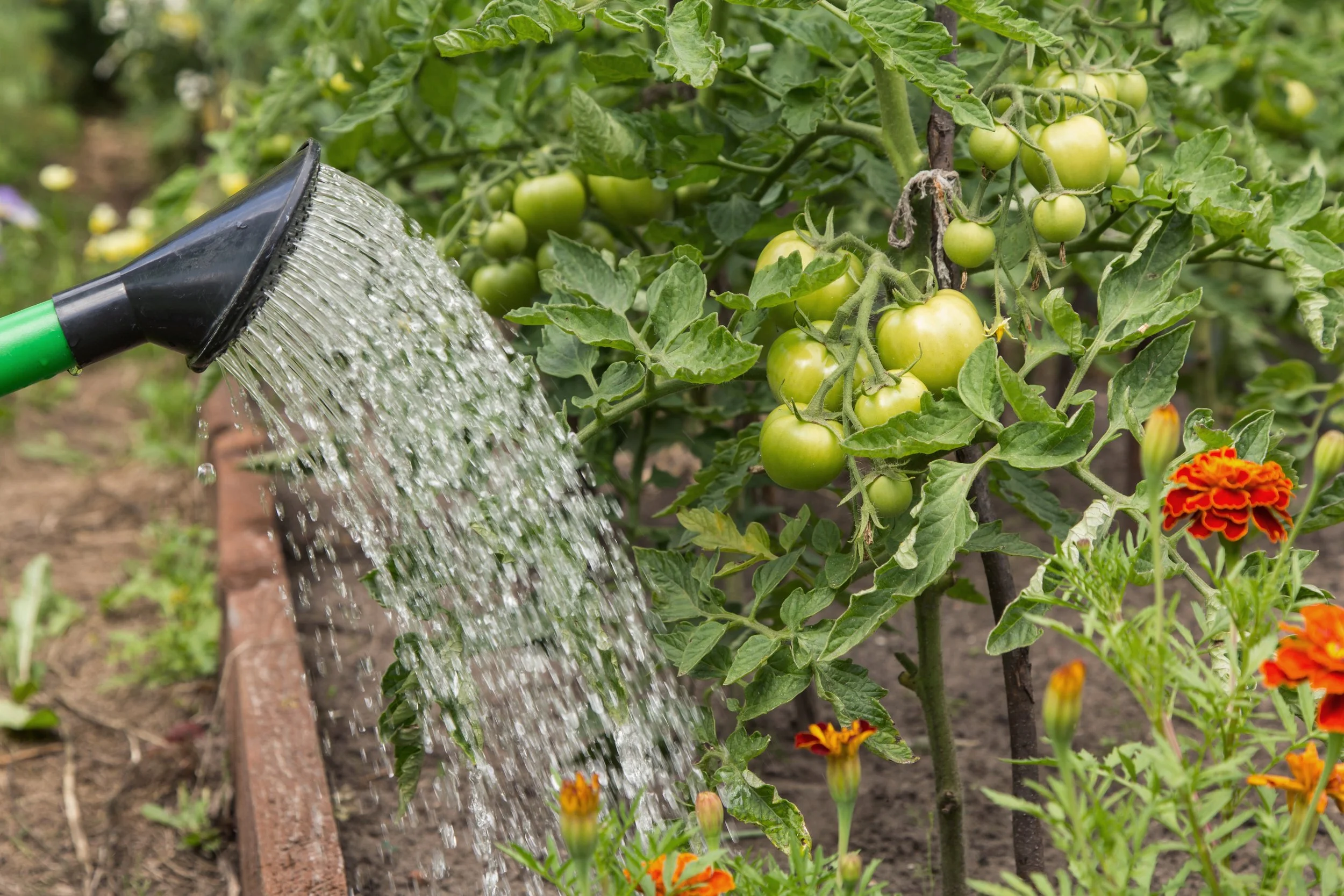
Quick answer: Keep the soil or compost evenly moist all the time and never let it dry out. In summer, tomatoes in pots and grow bags usually need watering every day, and twice a day or more in hot, sunny spells. Tomatoes in the ground or a greenhouse border need watering less often, but deeply, whenever the soil a few centimetres down feels dry. The time it matters most is from the first flowers until the last fruits have ripened.
Tomatoes are thirsty plants, but what they want most is consistency. A plant that swings between bone dry and soaked shows it in the fruit: split skins, and dark sunken patches on the bottom of the tomatoes. Get the rhythm right and you avoid most common tomato problems before they start.
How often you water depends on three things: where the plant is growing, the weather, and how big the plant and its crop have become.
How often to water tomato plants
As a rough summer guide for UK gardens:
Grow bags: every day from early summer, and two or three times a day in hot, sunny weather. A standard grow bag holds two plants in a shallow layer of compost, so it dries out faster than anything else.
Pots (30–45 cm across): every day in warm weather, with a second check in the late afternoon on hot days. Grow one plant per pot.
Greenhouse borders: check every day or two in summer and water when the soil feels dry a finger’s depth down. Glass traps heat, so borders dry faster than beds outside.
Outdoor beds: less often than containers, because the roots spread further and rain does some of the work. After a few dry days, check the soil and give a deep soak if it’s dry below the surface.
Newly planted tomatoes: water them in well, then keep the soil moist while the roots settle in, without leaving it soggy.
To check, push a finger into the compost up to the second knuckle, about 5 cm. If it feels dry at your fingertip, water now.
Why tomatoes need steady watering
Tomatoes take up calcium from the soil, and water is what carries it up through the plant. The fruit sits at the far end of that journey and loses out to the leaves whenever water runs short. Even a short dry spell can leave the developing fruit without enough calcium, and the result is blossom end rot: a dark, sunken patch on the end of the fruit opposite the stalk.
The soil almost never lacks calcium. The problem is the supply of water, which is why plants in grow bags and pots, with only a small amount of compost, suffer far more often than tomatoes in the ground.
Splitting works the other way. After a dry spell, a sudden soaking makes the fruit swell faster than its skin can stretch, and it cracks. Big swings in temperature in late summer make it worse. You can’t control the weather, but steady watering takes away the biggest swings.
Watering tomatoes through the season
After planting out (June outdoors, earlier under glass): water well on planting day, then keep the compost moist. Young plants don’t need much yet, and overwatering cold compost holds them back.
First flowers and fruit set: this is where the critical stage begins. The plant’s need for water rises quickly as trusses form, and dry compost now can make flowers drop off before they set. For more on flowers that fall or never appear, see why tomato plants aren’t flowering
Fruit swelling and ripening (July to September): peak demand. A big cordon carrying several trusses of fruit, in a pot on a sunny patio, can use more water in a day than you’d expect. This is when grow bags need watering more than once a day.
Late season (September and October): nights are cooler and compost stays damp for longer, so check before you water rather than watering out of habit. Keep watering any plant that is still carrying fruit. For ripening green tomatoes at the end of the season, see how to grow tomatoes in the UK
Watering tomatoes in grow bags and pots
Container tomatoes are the ones most at risk, so they’re worth a few extra habits:
Water little and often in hot weather. Two smaller waterings, morning and late afternoon, do more good than one large one that mostly runs off.
Don’t let a grow bag dry out. Once grow-bag compost has dried, water tends to run off the surface instead of soaking in. If it happens, water slowly in several small amounts, a few minutes apart, until the compost darkens and stays damp.
Use grow-bag rings. These bottomless rings sit on top of the bag and hold extra compost around each plant, giving the roots more room and a bigger reserve of moisture.
Choose bigger containers. A large pot holds more compost and more water, so it gives you more time between waterings.
Plan for holidays. A simple automatic or drip watering kit, or a neighbour on watering duty, is worth arranging before you go. One missed weekend in July can spoil a whole truss.
For general advice on pots and compost, see growing vegetables in containers in the UK
Watering tomatoes in the ground and greenhouse borders
Tomatoes in the ground have a much bigger root run, so they cope with a missed day far better than plants in pots.
Sink a pot beside each plant. When planting, bury a 15 cm plastic pot up to its rim next to each tomato and pour water into that. The water goes straight down to the roots instead of pooling around the stem, where it can cause rot.
Mulch. Spread a thick layer of garden compost or well-rotted manure around the plants to slow evaporation, leaving a small gap around the stem.
Ventilate the greenhouse. On warm days, open the vents and door. Very humid air slows the plant’s water uptake, which can lead to blossom end rot even when the border is damp.
Water the soil, not the leaves. Wet leaves stay damp for a long time in a closed greenhouse, which suits fungal diseases such as grey mould.
Signs your tomato plants need water
Leaves curling or drooping, especially in the afternoon
Compost shrinking away from the sides of the pot, or a pot that feels light when tipped
Soil dry 5 cm below the surface
Flowers falling off before fruit forms
Dark, sunken patches on the bottom of the fruit, a sign of earlier dry spells
On a very hot afternoon, tomatoes can droop and then recover by evening. If a plant still droops once the day has cooled, it needs water.
Signs of too much water
Compost that stays soggy or smells sour
Lower leaves turning yellow (this can also mean the plant is hungry, so check both)
Plants wilting even though the compost is wet, a sign that the roots are struggling
Check that pots drain freely, stand them on pot feet, and empty saucers after rain. If the compost is still wet, skip a watering and check again the next day. For more on plants that droop for no obvious reason, see why vegetable plants wilt
Feeding and watering together
Once the first fruits start to swell, feed tomatoes in pots and grow bags every 10–14 days with a high-potassium tomato feed. Tomatoes growing in rich ground may not need it, though a fortnightly feed can still increase the crop.
Always water first and feed onto moist compost. A strong feed added to dry compost makes it harder for the roots to take up water, which can make blossom end rot worse.
For how watering fits with other crops in the garden, see how often to water a vegetable garden
Common questions
Should I water tomato plants every day?
In pots and grow bags during summer, usually yes, and on hot days more than once. In the ground, no. Check the soil and water deeply when it’s dry a few centimetres down.
Is it better to water tomatoes in the morning or the evening?
Morning is best, so the plant has water for the hottest part of the day. In a heatwave, add a second watering in the late afternoon. Under glass, water the compost rather than the leaves.
Why are my tomatoes splitting?
Splitting usually follows uneven watering or big swings in temperature. A dry spell followed by a heavy soaking or a lot of rain makes the fruit swell too quickly for its skin. Steady watering helps, and picking fruit as soon as it ripens means fewer tomatoes are left on the plant to split.
Can I fix blossom end rot with a calcium spray?
No. Calcium sprays on the leaves don’t reach the fruit. Affected tomatoes won’t recover, so pick them off. Keep the compost evenly moist from now on and the later fruits should develop normally.
Watering, feeding and problem advice based on RHS guidance.