How Often to Water Courgettes
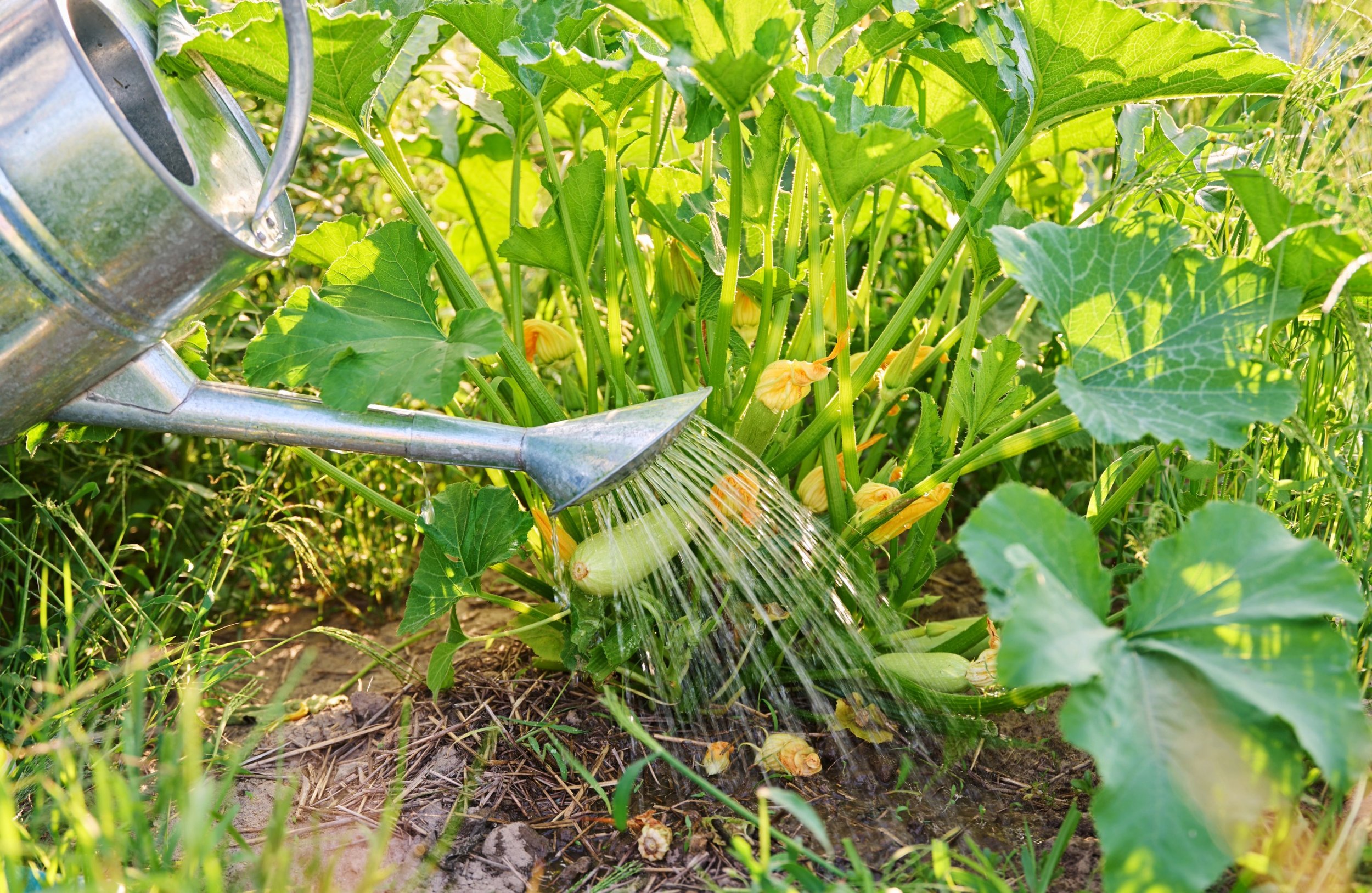
Of all the squash family, courgettes are the ones that most need a steady supply of water. A healthy plant can produce several courgettes a week at the height of summer, and every one of them is mostly water. Let the soil dry out and the plant slows down, drops its flowers and gets more prone to mildew. Keep it moist and it will carry on cropping for months.
The right routine for your plants comes down to three things: the weather, the type of soil you're gardening on, and whether they're planted out or growing in a container.
How often should you water courgettes?
Courgettes want moist soil from the day you plant them until the last courgette is picked. For plants in a bed, have a feel of the soil every other day or so when it hasn't rained. When it's no longer damp just under the surface, water heavily. During a hot, dry week that usually works out at a soak every two or three days. In pots, check daily in summer, as a big plant can dry out its compost within a day. Direct the water to the ground in a ring around each plant, never over the foliage or into its centre.
Why courgettes need more water than other squashes
Winter squash and pumpkins can cope with a fair bit of neglect once they're established, and often still give a decent crop with little watering. Courgettes can't. They're producing new fruit all summer long, rather than ripening a few big squashes, so they need a steady supply of water from planting right through to harvest. A dry spell in mid-summer is a common reason plants slow down and stop cropping.
Watering through the season
Settling in: give newly planted courgettes a generous drink on the day they go out, and don't let the ground around them dry out until you can see them putting on new leaves.
Flowering and fruiting: once flowers and fruit appear, the plants' water use shoots up. From then on, don't let the soil dry out.
Peak picking season: especially in hot weather, keep checking every couple of days. This is when a missed watering shows up fastest.
Watering courgettes in garden beds
Courgettes in open ground usually need watering whenever the weather turns dry, and especially once they're flowering and fruiting.
Give each plant a long, slow drink so the water sinks down to the roots, rather than a quick splash that runs off. The finger test is the simplest guide. If the soil still feels cool and damp at the depth of your knuckle, leave it. If it's dusty and dry, water.
Keep the water off the crown. The centre of a courgette plant, where the stems meet the soil, is prone to rotting if it stays wet. Pour water in a circle around the plant, a little way out from the stem.
Keep the leaves dry. Water sitting on the leaves encourages mildew, and water poured over the top can collect in the dying flowers on the end of the fruit and start them rotting.
Mulch well. Spread a generous blanket of compost or well-rotted manure over the soil around the plant, stopping short of the stem itself, and the ground will stay moist far longer between waterings.
Watering courgettes in containers
A courgette in a pot is growing fast with limited compost to draw on, so it can run dry surprisingly quickly.
In warm weather, check the compost every day. In a heatwave it may need watering morning and evening. Pour slowly, and keep going until you see water seeping from the drainage holes, which tells you the whole pot is wet through. Use as large a pot as you can, as more compost means more water held in reserve.
Pot-grown courgettes also need feeding. Once the first fruits are forming, add a potash-rich liquid fertiliser, the kind sold for tomatoes, to the watering can every fortnight or so.
For container advice, see growing courgettes in containers.
Signs your courgettes are thirsty
Plants short of water tend to show it in a few ways. The leaves stay limp through the evening instead of recovering once the day cools. Flowers and baby courgettes drop off, or small fruits shrivel at the tip. And a white, dusty-looking film appears on the leaves, a sign of powdery mildew, which takes hold much more easily when the roots have been left dry.
Watering is only one reason for fruit problems, though. Poor pollination in cool, wet weather is just as common. If flowers are dropping, see why courgette flowers fall off.
Avoiding overwatering
Courgettes like moisture, but not waterlogged soil. Overwatered plants often show yellowing on their older leaves, a dark, mushy patch where the stem meets the soil, and fruit that goes soft at the tip in damp weather. In wet spells, pick off soggy dead flowers from the tips of young fruit to stop rot spreading into them.
If your garden is on heavy clay, work in lots of organic matter before planting and set each courgette on a low ridge of soil, so rain drains away from the crown rather than pooling around it.
You can read more in how often to water a vegetable garden.
Healthy courgette growth
Courgettes crop best when the soil stays moist all season, the water goes onto the soil rather than the plant, the ground is mulched, and pots are checked every day. Picking regularly helps too, as plants left with oversized courgettes slow down.
For growing advice, see how to grow courgettes in the UK. For picking tips, see when to harvest courgettes.
Common questions
How often should I water courgettes in hot weather?
When it hasn't rained for a while, feel the soil every other day and give it a heavy soak once it's dry just under the surface. During a heatwave, that might mean a soak every two or three days for plants in beds, and every day for any in containers.
Does lack of water cause powdery mildew on courgettes?
Very often, yes. Mildew spreads much more readily on plants whose roots have gone dry, and it's usually worst in the warm, dry weeks of late summer. Regular deep watering at ground level, and keeping the foliage dry, gives it far less of a foothold.
Why are my courgettes rotting at the end?
Rot at the flower end is usually down to damp weather, when dead flowers stay wet and the rot spreads into the fruit. Water the soil rather than the plant, and remove soggy flowers from young courgettes. Poor pollination can also cause small courgettes to shrivel and rot.
Should I water courgettes in the morning or evening?
Try to water early in the morning or in the evening, when less water is lost to evaporation. If you're prone to splashing the foliage, the morning has the edge, because the leaves have all day to dry.
Growing advice checked against RHS guidance.