Growing Potatoes in Containers or Grow Bags
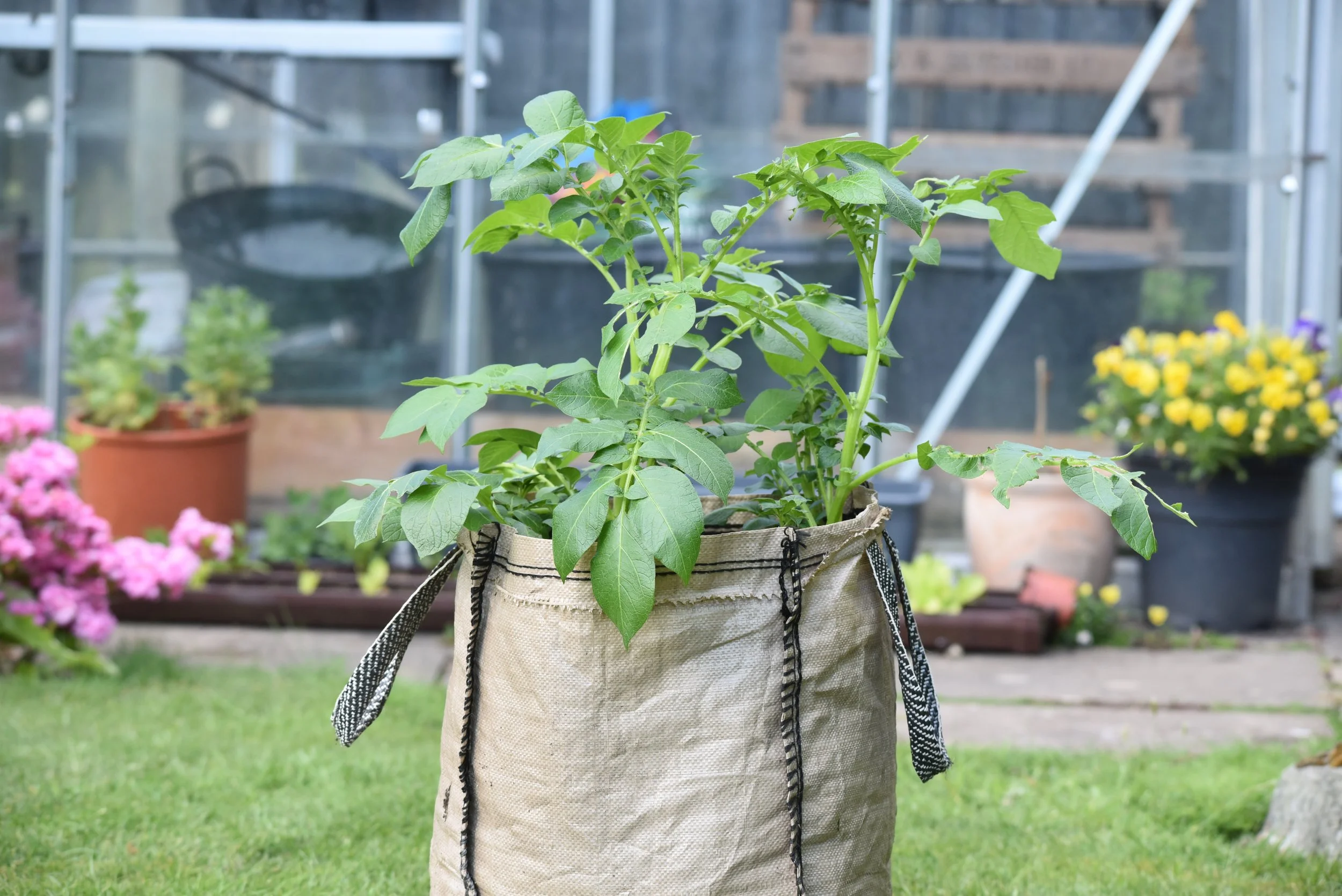
Few crops take to life in a pot as happily as potatoes. There's no digging needed, the compost warms up quickly in spring, and harvesting is as simple as tipping the container out and gathering the potatoes. Pick a decent-sized container, fill it up in stages and keep it watered, and even a small patio can give you a surprisingly good crop.
Quick answer
Choose a container that's 30 cm or more across and deep, with one seed potato for each 30 cm of width. Early varieties are the best choice. Start with 10–15 cm of compost in the bottom, plant the seed potatoes, and keep adding compost as the shoots grow until the container is almost full. Keep watering even when it rains, give a liquid feed fortnightly, and simply empty the container when it's time to harvest.
Choosing containers for potatoes
Potatoes need depth, as the tubers form along the buried stems. The RHS recommends a container at least 30 cm wide and 30 cm deep, but bigger is better, as more compost means a larger crop and less frequent watering.
Good options include:
potato grow bags, made from fabric or thick plastic
large pots, tubs and planters
old buckets or bins with drainage holes drilled in the base
Good drainage is non-negotiable, because seed potatoes rot in soggy compost.
How many seed potatoes per container?
The RHS rule of thumb is one seed potato per 30 cm of container width. As a guide:
30 cm pot: 1 seed potato
60 cm tub: about 3
Large potato grow bag: usually 2 or 3
It's tempting to add more, but crowded plants fight over moisture and nutrients, and you end up with a lot of tiny potatoes.
Best potatoes for containers
In pots and bags, earlies tend to do best. The plants are smaller, they're ready much sooner, and they're harvested before blight usually strikes in summer. First and second earlies such as 'Charlotte' are popular choices for pots and bags.
Maincrops will grow in pots too, but they need a very large pot and a long season to give a worthwhile harvest.
Planting potatoes in layers
Rather than filling the container to the top at the start, it's filled gradually. Think of it as earthing up in a pot. The more stem you bury, the more room there is for new potatoes to develop.
Put 10–15 cm of multi-purpose compost in the bottom of the container.
Set the seed potatoes on top, shoots facing upwards, spaced evenly.
Cover them with another 10 cm or so of compost and water well.
Each time the shoots grow about 15 cm above the surface, add more compost to cover most of the leaves, leaving just the tips showing.
Keep going until the compost is a few centimetres below the rim.
If you're using a grow bag, roll the sides down at the start and unroll them as you add compost.
You can read more in best soil for vegetable gardening in the UK
When to plant container potatoes
Container potatoes can be planted at the same times as in the ground: first earlies from late March and second earlies in April. Because compost warms faster than soil, and pots can be moved into a greenhouse or sheltered spot on cold nights, you can often plant a little earlier.
For planting advice, see when to plant potatoes in the UK
Watering container potatoes
Don't rely on the rain. A pot full of potato plants has a thick roof of foliage, and most of a shower runs off the leaves and over the edge, leaving the compost below still dry. Feel the compost most days, especially when it's warm, and water thoroughly until it runs from the base, especially once the plants start to flower, when the potatoes are forming.
For watering advice, see how often to water potatoes
Feeding container potatoes
Potatoes in the ground rarely need extra food, but in a container the compost is soon exhausted. Either stir a general-purpose fertiliser in at planting, or water on a liquid feed fortnightly while the plants are in active growth.
Position and sunlight
Stand containers in full sun, somewhere sheltered from strong winds. If frost threatens once the shoots are up, throw some fleece over them or wheel the pot into a shed or porch overnight.
Harvesting container potatoes
This is where containers really shine. Early varieties generally need about three months, and flowering is the cue to start checking. To check, push your hand into the compost and feel for potatoes. When they're a good size, tip the whole container out onto a sheet and gather them up. There's no digging, and no risk of spearing the crop with a fork.
For harvesting advice, see when to harvest potatoes
Christmas potatoes in containers
Specially prepared seed potatoes are sold in late summer for a festive crop. Plant them in pots exactly as above, and bring the containers somewhere frost-free, such as a greenhouse, before the weather turns cold in autumn.
For full growing advice, see how to grow potatoes in the UK
Common questions
What size container do potatoes need?
At least 30 cm wide and deep, with one seed potato for every 30 cm of width. Bigger containers give bigger crops and need watering less often.
How many seed potatoes in a grow bag?
Usually two or three, depending on the size of the bag. Overcrowding gives lots of small potatoes, so resist adding more.
How do you plant potatoes in a grow bag?
Plant them on 10–15 cm of compost, cover with another 10 cm, and add more compost each time the shoots grow about 15 cm, leaving the tips showing, until the container is nearly full.
Why do potatoes in pots need watering after rain?
The foliage sheds most rain over the side of the pot, so the compost can stay dry even after a shower. Check containers every day or two and water until it drains from the base.
Growing advice checked against RHS guidance.