Why Onions Don’t Form Bulbs (and How to Fix It)
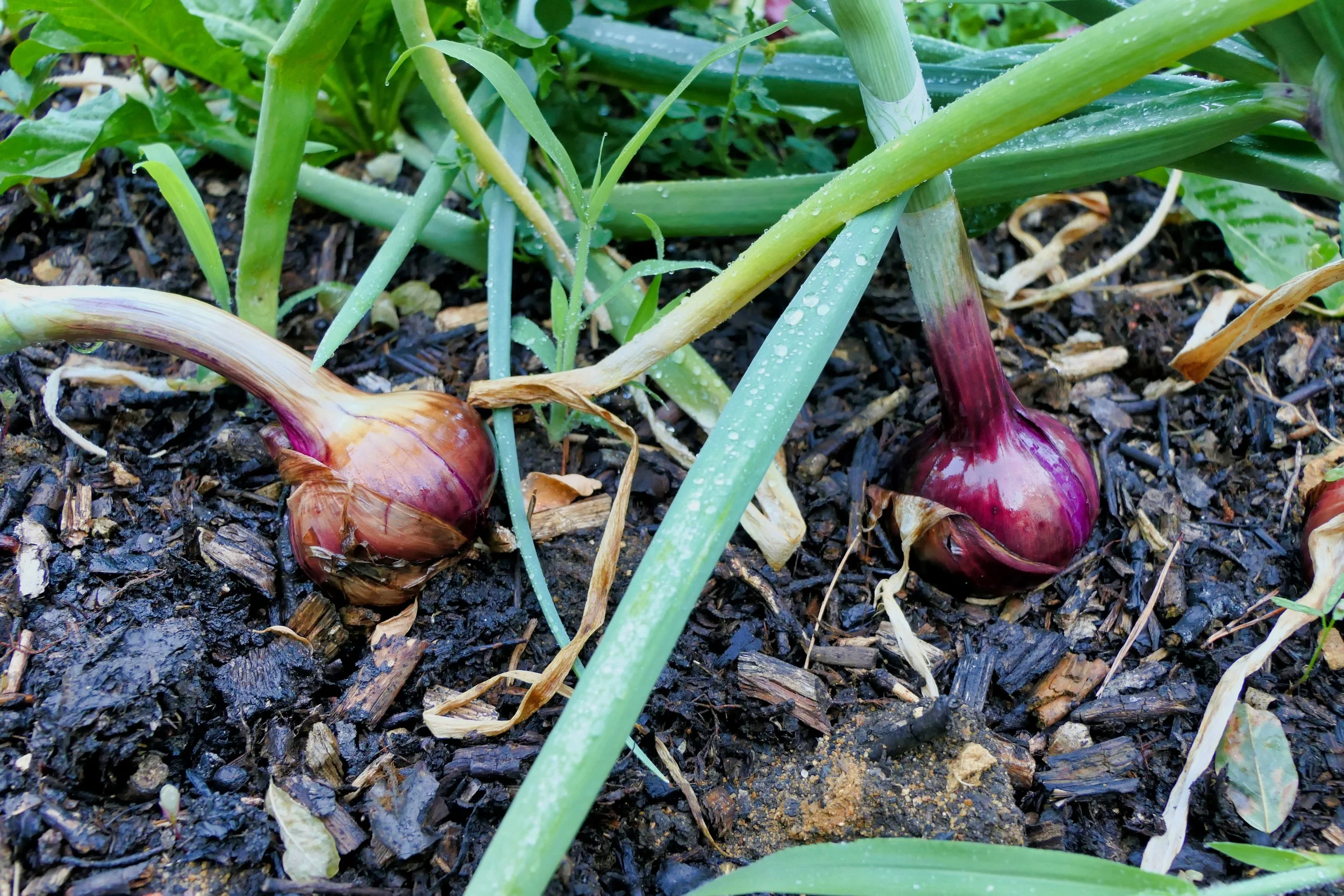
It's one of the most puzzling problems in the veg patch: onion plants that look lush and healthy above ground, but when you pull them up there's barely a bulb, just a thick stem or a small, disappointing swelling. The cause is nearly always something that happened months earlier, at planting time or during spring.
Understanding what triggers an onion to form its bulb is the key to getting a good crop next year.
Quick answer
Onions start to form bulbs in response to lengthening days in early summer. If the plant hasn't grown enough leaves by then, because it was planted late or held back by shade, crowding, weeds or dry soil, the bulb stays small. Onions that bolt and send up a flower stalk also fail to bulb properly. Too much nitrogen fertiliser can keep plants making leaves instead of bulbs.
Quick diagnosis: what are you seeing?
Plenty of leaves, but a thick neck and no real bulb: bolting, too much nitrogen, or planting a salad onion variety.
Small bulbs on healthy plants: planted late, crowded, or short of sun.
Small bulbs on weak plants: dry soil in spring, poor soil or weed competition.
A tall flower stalk in the centre: bolting, usually after a cold spell.
Bulbs rotting in the ground: waterlogged soil or disease.
How onions form bulbs
Onions don't decide to form bulbs based on their size. They respond to day length. As the days get longer in early summer, the plant stops making new leaves and switches to swelling a bulb.
Each leaf the plant has grown by then becomes a layer of the bulb, so a plant with plenty of healthy leaves makes a big onion, and one with only a few makes a small one. That's why everything that slows growth in spring shows up as small bulbs at harvest.
Varieties sold in UK garden centres are chosen to bulb at the right time for British summers. Seed or sets bought for other climates may not bulb properly here.
1. Planting too late
If onions go in late, they have less time to build up leaves before the long days of summer trigger bulbing. The result is a small bulb, however well you look after them afterwards.
Plant spring sets in March and April, and overwintering sets in September or October.
For planting advice, see when to plant onions in the UK
2. Bolting
Sometimes an onion sends up a thick flower stalk from the centre instead of fattening its bulb. This is bolting, and it's usually triggered by a cold snap after planting. A bolted onion develops a thick, woody neck and a poor bulb that won't keep.
Snap off any flower stalks as soon as you spot them, and use those onions first. Next year, choose heat-treated sets, which are far less prone to bolting, and avoid planting into cold, wet soil too early in spring.
3. Not enough sunlight
Onions need a bright, open spot to form good bulbs. In shade, the plants stay leafy and thin, and the bulbs never size up. Grow them in the sunniest part of your garden.
4. Planted too close together
Crowded onions compete for light, water and nutrients, and each one ends up smaller. Space sets 10–15 cm apart, in rows 20–30 cm apart. For bigger bulbs, use the wider spacing.
5. Weeds
Onion leaves are upright and thin, so they do little to shade out weeds, and weeds quickly take the water and food the onions need. Keep the rows weeded, pulling weeds by hand close to the bulbs.
6. Dry soil in spring
Onions need moisture while their roots are getting established and the leaves are growing in spring. Plants that dry out then are held back and form smaller bulbs. Water during dry spells in spring and early summer, then stop once the bulbs have reached full size.
For watering advice, see how often to water onions
7. Poor soil, or too much nitrogen
Onions like fertile, well-drained soil improved with compost. Very heavy or compacted soil holds them back, and waterlogged ground can make the bulbs rot. On the other hand, heavy doses of nitrogen-rich fertiliser or fresh manure encourage lots of soft leaves at the expense of the bulb, and give thick necks that don't store well.
Dig in garden compost or well-rotted manure before planting, and avoid adding high-nitrogen fertiliser once the plants are growing.
You can read more in best soil for vegetable gardening in the UK
8. Growing a salad onion variety
Spring onions, sometimes sold as salad onions, are bred to be eaten young and green, and many varieties never form a proper bulb. If your "onions" have long, straight white stems, check the seed packet. You may have sown a salad variety.
9. Lifting too early
Bulbs keep swelling until the leaves start to yellow and fall over. Lift them too early and they'll be smaller than they could have been. Wait until most of the foliage has toppled.
For harvesting advice, see when to harvest onions
For full growing advice, see how to grow onions in the UK
Common questions
Why are my onions not forming bulbs?
Most commonly because they were planted late, bolted, or were held back by shade, crowding, weeds or dry soil in spring. Too much nitrogen fertiliser can also keep them producing leaves instead of bulbs.
Why are my onion bulbs so small?
Onions form bulbs as the days lengthen in early summer. A plant that hasn't grown enough leaves by then, often because it was planted late or crowded, makes a small bulb.
Why do my onions have thick necks?
Thick necks are usually a sign of bolting or too much nitrogen. Use those onions first, as they won't store well.
What should I do if my onion is flowering?
Snap it off as soon as you see it. The onion won't keep well, so use it soon. Next year, choose heat-treated sets and avoid planting into cold soil.
Growing advice checked against RHS guidance.