Growing Kale in Containers
Quick facts
Two options: baby salad leaves, or full-size plants from a compact variety
Pot size for full-size kale: at least 30 cm wide and 30 cm deep, one plant per pot
Spacing for baby leaves: about 7.5 cm apart
Compost: multi-purpose compost
Good varieties: 'Dwarf Green Curled', 'Starbor' or 'Yurok' for full-size plants
Key moment: planting deep and sheltering the pot from wind, as kale gets top-heavy
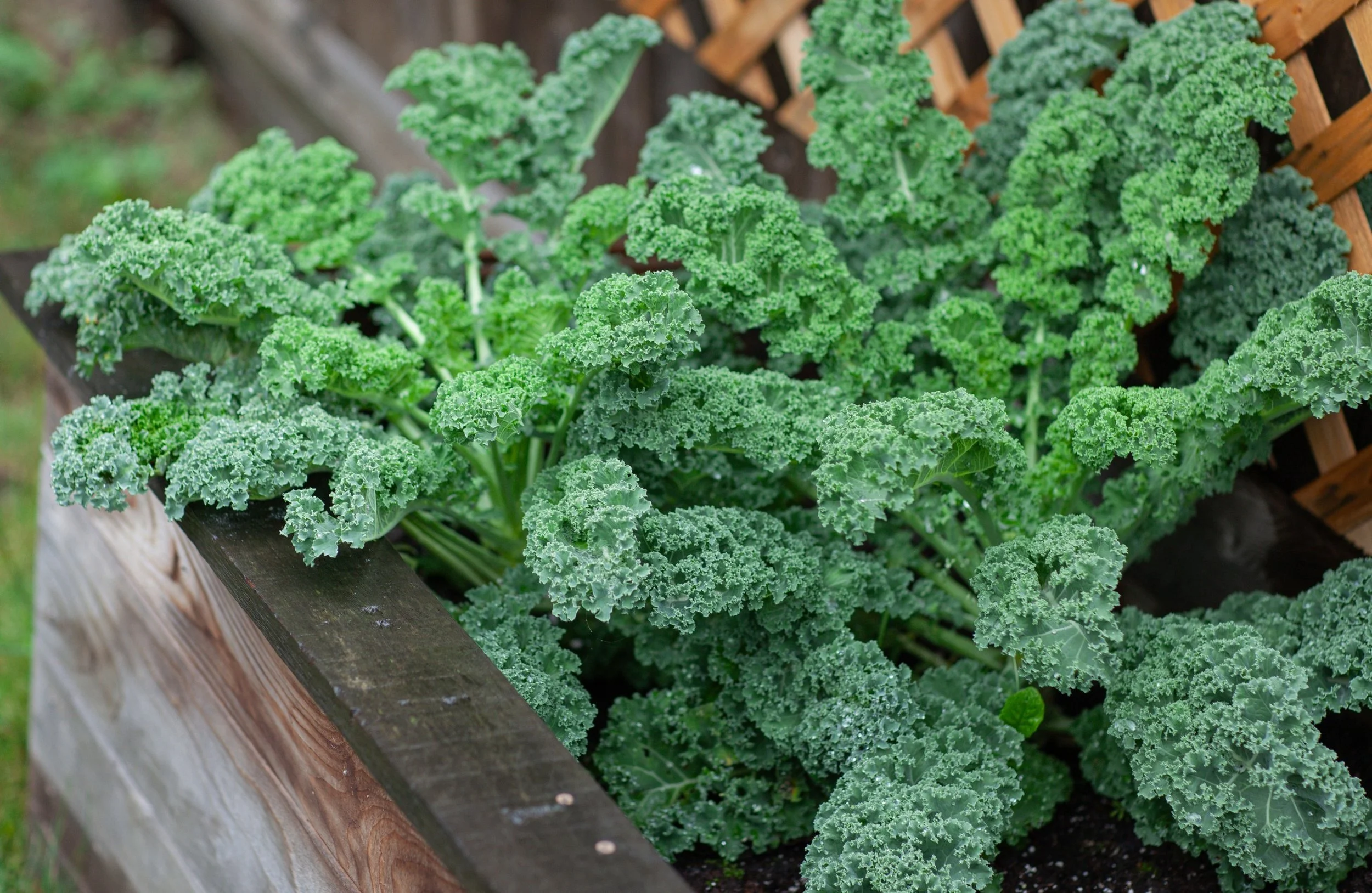
Kale is one of the most useful vegetables for a patio or balcony. A single plant in a pot can give you leaves to pick from September right through to spring, and the frilly or deep purple varieties look good while they do it. It's also a way round clubroot, as fresh compost in a pot starts free of the disease.
Baby leaves or full-size plants?
Decide this first, because it changes everything else.
Baby salad leaves are the easiest option in containers. Seeds are sown close together and the leaves are picked young, so almost any container works, including troughs, window boxes and grow bags. You can sow a new batch every few weeks.
Full-size kale gives you winter pickings from a single plant. It needs a compact variety and one plant in a deep pot of its own. Standard kale can reach 90 cm tall, which is too big and top-heavy for most containers.
Choosing a container
For baby leaves: any container with drainage holes and at least 15 cm of compost. Troughs and grow bags are ideal because they give a wide surface to sow across.
For full-size plants:
a pot at least 30 cm wide and 30 cm deep for each plant
a heavy pot, such as terracotta or glazed ceramic, rather than lightweight plastic, so it doesn't blow over in winter
drainage holes, with the pot raised on feet or bricks so water can run away
Grow bags are too shallow for full-size kale. The plant can't root deeply enough to stay upright.
For more on choosing pots for vegetables, see growing vegetables in containers
Choosing a kale variety for pots
For full-size plants, pick a compact variety:
'Dwarf Green Curled': a short, curly kale that suits pots well
'Starbor': compact and bred for small spaces (RHS Award of Garden Merit)
'Yurok': a compact Tuscan-style kale with long, dark leaves (RHS Award of Garden Merit)
For baby leaves, any variety works. Coloured types such as 'Red Russian' look especially good in salads.
Sowing kale in containers
Baby leaves: fill the container with multi-purpose compost and water it. Scatter the seeds thinly over the surface, or sow them about 7.5 cm apart, then cover with about 1 cm of compost. Sow a fresh container every three or four weeks from spring to midsummer for a steady supply.
Full-size plants: sow three seeds in the middle of each large pot, about 1 cm deep. When the seedlings come up, pull out the two weakest and leave the strongest to grow on. Sow from March to June.
For sowing times, see when to plant kale in the UK
Planting young kale into pots
If you raised seedlings in modules or bought young plants, move them into their final pot when they're 10–15 cm tall. Plant them deeper than they were growing, with the lowest leaves at compost level, and press the compost down firmly around the stem. Deep planting helps a tall plant stay upright in the wind.
Watering container kale
Compost in a pot dries out far faster than garden soil. In summer, check container kale every day or two and water whenever the top few centimetres feel dry. Keep checking through autumn and winter too, as pots sheltered by walls or eaves can miss the rain.
For more detail, see how often to water kale
Feeding container kale
The nutrients in potting compost run out after a few weeks, and a plant in a pot can't search for more. Once plants are growing well, give full-size container kale a nitrogen-rich organic liquid feed every few weeks through summer and early autumn. Baby leaves picked young don't usually need feeding.
Where to put container kale
Kale grows best in sun but copes with a little shade. Stand full-size plants somewhere sheltered from strong wind, such as against a wall or fence. In an exposed spot, push a cane into the pot and tie the stem to it before the autumn gales.
Protecting container kale
Pots don't keep pests away. Pigeons, cabbage white caterpillars and flea beetles find container kale just as easily as kale in a bed. A cover of fine insect-proof mesh, held over the pot on canes or hoops, keeps them off. Check under the leaves for caterpillar eggs and aphids from midsummer.
For other problems, see why kale doesn't grow
Harvesting container kale
Baby leaves: start picking when plants are 10–15 cm tall. Either pick individual leaves, or cut the whole plant a little above the compost and let it regrow.
Full-size plants: from September, take two or three of the lowest leaves at a time and leave the top growing. A compact plant has fewer leaves than one in the ground, so pick lightly.
For more detail, see when to harvest kale
For the whole growing season, see how to grow kale in the UK
Common questions
Can you grow kale in pots?
Yes. Baby salad leaves grow well in almost any container, and compact varieties such as 'Dwarf Green Curled' can grow to full size in a pot at least 30 cm wide and deep.
How many kale plants per pot?
One full-size plant per 30 cm pot. For baby salad leaves, plants can be as close as 7.5 cm apart.
Can you grow kale in a grow bag?
Grow bags are fine for baby salad leaves, but too shallow for full-size kale. A tall plant needs a deep pot to root firmly and stay upright.
Does container kale survive winter?
Yes. Kale is fully hardy. Stand the pot somewhere sheltered from strong wind, stake tall plants, and keep an eye on watering if the pot is out of the rain.
Container size, spacing, varieties and care based on RHS guidance.